
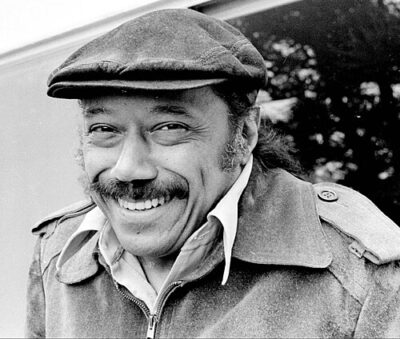
Horace Silver
Horace Silver was an American jazz pianist and composer. Born September 2, 1928, in Norwalk. Died June 18, 2014, in New Rochelle. Educated at Norwalk High School. Awards include NEA Jazz Masters.
Facts
21 facts · 2 confirmed by two sources · 9 cited · 10 from one source
Where this comes from
Papalocal keeps its own record. It started from these sources; what each one said is kept here as it was copied, so a change on their side never changes this page by itself. Tap one to read its version.
What Wikidata says · copied November 15, 2026 · revision 2563857567
- Described as
- American jazz pianist and composer (1928–2014)
- Other names
- Horace Ward Martin Tavares Silva, Horace Ward M. T. Silver, Horace Ward Martin Tavares Silver
- Born
- September 2, 1928 · 7 references
- Died
- June 18, 2014 · 6 references
- Born in
- Norwalk · 2 references
- Died in
- New Rochelle · 2 references
- Name at birth
- Horace Ward Martin Tavares Silver
- Citizen of
- United States
- Occupation
- pianist · 1 reference; composer · 1 reference; bandleader · 1 reference; conductor; jazz musician · 1 reference; recording artist
- Education
- Norwalk High School · 1 reference
- Member of
- The Horace Silver Quintet
- Genre
- jazz; hard bop · 1 reference
- Instrument
- piano · 1 reference
- Record label
- Blue Note; Columbia Records
- Awards
- NEA Jazz Masters
- Website
- http://www.horacesilver.com · 1 reference
- Wikipedias with a page
- 32
Wikidata item Q365560 (wikidata.org/wiki/Q365560), public domain (CC0). Copied November 15, 2026.
What Wikipedia says · copied November 15, 2026 · revision 1380118278
Horace Ward Martin Tavares Silver (September 2, 1928 – June 18, 2014) was an American jazz pianist, composer, and arranger, particularly in the hard bop style that he helped pioneer in the 1950s.
After playing tenor saxophone and piano at school in Connecticut, Silver got his break on piano when his trio was recruited by Stan Getz in 1950. Silver soon moved to New York City, where he developed a reputation as a composer and for his bluesy playing. Frequent sideman recordings in the mid-1950s helped further, but it was his work with the Jazz Messengers, co-led by Art Blakey, that brought both his writing and playing the most attention. Their album Horace Silver and the Jazz Messengers contained Silver's first hit, "The Preacher". After leaving Blakey in 1956, Silver formed his own quintet, with what became the standard small group line-up of tenor saxophone, trumpet, piano, bass, and drums. Their public performances and frequent recordings for Blue Note Records increased Silver's popularity, even through changes of personnel. His most successful album was Song for My Father, made with two iterations of the quintet in 1963 and 1964.
Several changes occurred in the early 1970s: Silver disbanded his group to spend more time with his wife and to concentrate on composing; he included lyrics in his recordings; and his interest in spiritualism developed. The last two of these were often combined, resulting in commercially unsuccessful releases such as The United States of Mind series. Silver left Blue Note after 28 years, founded his own record label, and scaled back his touring in the 1980s, relying in part on royalties from his compositions for income. In 1993, he returned to major record labels, releasing five albums before gradually withdrawing from public view due to health problems.
As a player, Silver transitioned from bebop to hard bop by stressing melody rather than complex harmony, and combined clean and often humorous right-hand lines with darker notes and chords in a near-perpetual left-hand rumble. His compositions similarly emphasized catchy melodies, but often also contained dissonant harmonies. Many of his varied repertoire of songs, including "Doodlin'", "Peace", and "Sister Sadie", became jazz standards that continue to be played widely. His considerable legacy encompasses his influence on other pianists and composers, and the development of young jazz talents who appeared in his bands over the course of four decades.
- Born, in its opening lines
- September 2, 1928
- Died, in its opening lines
- June 18, 2014
From the Wikipedia article “Horace Silver” (en.wikipedia.org/wiki/Horace_Silver), by its contributors, under CC BY-SA 4.0 (creativecommons.org/licenses/by-sa/4.0/). Copied November 15, 2026; not changed.
Confirmed Two sources agree. Cited One source, and it names where it got it. One source One source, without a reference of its own. Sources disagree The sources disagree. We show the best-supported value and keep theirs below.
