
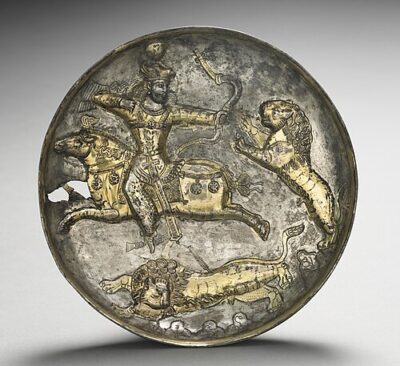
Hormizd III
Hormizd III was The 17th Sassanid Emperor. Born 5th century. Died 459. Positions held include emperor of the Sasanian Empire (457–459).
Facts
12 facts · 0 confirmed by two sources · 0 cited · 10 from one source · 2 where the sources disagree
What’s different
- Born: we show 5th century (Sources disagree). Wikipedia says 438
- Died: we show 459 (Sources disagree). Wikipedia says 457
Where this comes from
Papalocal keeps its own record. It started from these sources; what each one said is kept here as it was copied, so a change on their side never changes this page by itself. Tap one to read its version.
What Wikidata says · copied November 16, 2026 · revision 2553935654
- Described as
- The 17th Sassanid Emperor (457–459)
- Born
- 5th century
- Died
- 459
- Citizen of
- Sasanian Empire
- Occupation
- sovereign
- Positions held
- emperor of the Sasanian Empire (457–459)
- Children
- Balendukht
- Father
- Yazdegerd II
- Mother
- Diang of Persia · 1 reference
- Siblings
- Peroz I; Balash; Zarir
- Religion
- Zoroastrianism
- Wikipedias with a page
- 37
Wikidata item Q315929 (wikidata.org/wiki/Q315929), public domain (CC0). Copied November 16, 2026.
What Wikipedia says · copied November 16, 2026 · revision 1376639235
Hormizd III (Middle Persian: 𐭠𐭥𐭧𐭥𐭬𐭦𐭣; New Persian: هرمز سوم) was the seventeenth king (shah) of the Sasanian Empire, ruling briefly from 457 to 459. He was the son and successor of Yazdegerd II (r. 438–457). His reign was marked by the rebellion of his younger brother Peroz I, who with the aid of one of the Seven Great Houses of Iran, the House of Mihran, and the eastern neighbours of the Sasanians, the Hephthalites, had him captured and executed.
- Born, in its opening lines
- 438
- Died, in its opening lines
- 457
From the Wikipedia article “Hormizd III” (en.wikipedia.org/wiki/Hormizd_III), by its contributors, under CC BY-SA 4.0 (creativecommons.org/licenses/by-sa/4.0/). Copied November 16, 2026; not changed.
Confirmed Two sources agree. Cited One source, and it names where it got it. One source One source, without a reference of its own. Sources disagree The sources disagree. We show the best-supported value and keep theirs below.
