
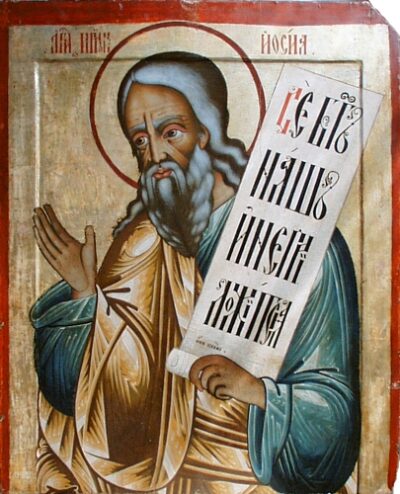
Hosea
Hosea was a biblical figure associated with the Book of Hosea. Born 784 BC, in United Kingdom of Israel.
Facts
10 facts · 0 confirmed by two sources · 5 cited · 5 from one source
Where this comes from
Papalocal keeps its own record. It started from these sources; what each one said is kept here as it was copied, so a change on their side never changes this page by itself. Tap one to read its version.
What Wikidata says · copied November 16, 2026 · revision 2561373734
- Described as
- biblical figure associated with the Book of Hosea
- Born
- 784 BC · 1 reference
- Born in
- United Kingdom of Israel · 1 reference
- Died in
- Safed · 1 reference
- Buried in
- Safed old cemetery
- Occupation
- prophet · 1 reference
- Field
- prophecy · 1 reference
- Spouse
- Gomer · 1 reference
- Children
- Lo-Ammi · 1 reference; Lo-Ruhama · 1 reference
- Father
- Beeri
- Wikipedias with a page
- 57
Wikidata item Q665541 (wikidata.org/wiki/Q665541), public domain (CC0). Copied November 16, 2026.
What Wikipedia says · copied November 16, 2026 · revision 1371624197
In the Hebrew Bible, Hosea ( hoh-ZEE-ə or hoh-ZAY-ə; Hebrew: הוֹשֵׁעַ, romanized: Hōšēaʿ, lit. 'Salvation'), also known as Osee (Ancient Greek: Ὡσηέ, romanized: Hōsēé), son of Beeri, was an 8th-century BC prophet in Israel and the nominal primary author of the Book of Hosea. He is the first of the Twelve Minor Prophets, whose collective writings were aggregated and organized into a single book in the Jewish Tanakh by the Second Temple period (forming the last book of the Nevi'im) but which are distinguished as individual books in Christianity. Hosea is often seen as a "prophet of doom", but underneath his message of destruction is a promise of restoration. The Talmud claims that he was the greatest prophet of his generation. The period of Hosea's ministry extended to some sixty years, and he was the only prophet of Israel of his time who left any written prophecy.
Most scholars since the nineteenth and twentieth centuries have agreed on the contemporaneous dating of Hosea and the Book of Hosea to the time of Jeroboam II, although some redaction-critical studies of Hosea since the 1980s have postulated that the theological and literary unity was created by editors, and scholars differ significantly in their interpretations of the redaction process, stages, and the extent of the eighth-century prophet’s original contributions. Nevertheless, aspects of eighth-century history are generally considered to be reflected in the text.
From the Wikipedia article “Hosea” (en.wikipedia.org/wiki/Hosea), by its contributors, under CC BY-SA 4.0 (creativecommons.org/licenses/by-sa/4.0/). Copied November 16, 2026; not changed.
Confirmed Two sources agree. Cited One source, and it names where it got it. One source One source, without a reference of its own. Sources disagree The sources disagree. We show the best-supported value and keep theirs below.
