
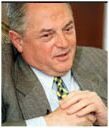
Hrvoje Šarinić
Hrvoje Šarinić was a Croatian politician. Born February 17, 1935, in Sušak. Died July 21, 2017, in Zagreb. Positions held include Prime Minister of Croatia (1992–1993). Educated at University of Zagreb. Awards include Order of Ante Starčević, Grand Order of King Petar Krešimir IV and Order of Danica Hrvatska.
Facts
15 facts · 2 confirmed by two sources · 3 cited · 10 from one source
Where this comes from
Papalocal keeps its own record. It started from these sources; what each one said is kept here as it was copied, so a change on their side never changes this page by itself. Tap one to read its version.
What Wikidata says · copied November 18, 2026 · revision 2563713737
- Described as
- Croatian politician (1935–2017)
- Born
- February 17, 1935 · 2 references
- Died
- July 21, 2017 · 3 references
- Born in
- Sušak
- Died in
- Zagreb · 1 reference
- Buried in
- Samobor City Cemetery · 1 reference
- Citizen of
- Croatia
- Occupation
- politician; architect
- Positions held
- Prime Minister of Croatia (1992–1993)
- Political party
- Croatian Democratic Union
- Education
- University of Zagreb
- Awards
- Order of Ante Starčević; Grand Order of King Petar Krešimir IV; Order of Danica Hrvatska
- Lived in
- Samobor · 1 reference
- Wikipedias with a page
- 20
Wikidata item Q984278 (wikidata.org/wiki/Q984278), public domain (CC0). Copied November 18, 2026.
What Wikipedia says · copied November 18, 2026 · revision 1378249574
Hrvoje Šarinić (pronounced [xr̩̂ʋoje ʃǎrinit͡ɕ]; 17 February 1935 – 21 July 2017) was a Croatian politician who served as Prime Minister of Croatia from 1992 to 1993.
Šarinić was born in Sušak and graduated from the University of Zagreb then-Faculty of Architecture, Construction and Geodesy.
Šarinić had a business career in Paris, France. He was a dual citizen of both Croatia and of France, as he spent 24 years in France, from 1963 to 1987. After the first democratic elections in Croatia, he joined the government of Franjo Tuđman and became head of his personal office.
After the parliamentary elections of 1992 he, as member of Croatian Democratic Union (HDZ), was appointed to the post of prime minister.
His cabinet, like all in Tuđman years, was less concerned with foreign policy and war and more with domestic issues. One of those issues was privatisation of state-owned companies. During his time many of the most controversial events of that process took place, including the now infamous takeover of Slobodna Dalmacija in early 1993.
By that time Croatian economy continued to decline, Šarinić himself became immensely unpopular and even his native Primorje-Gorski Kotar County rejected HDZ at local elections in February 1993. All that, together with escalating war in Bosnia-Herzegovina, led Tuđman to replace him with Nikica Valentić in April 1993.
Šarinić was not demoted, however. He continued to serve as Tuđman's close advisor and was, for a while, head of Croatian security services.
He remained in public spotlight because of his diplomatic missions and frequent negotiations with Slobodan Milošević. After one of those missions he created great deal of controversy by claiming that one of the results of former Yugoslav wars should be "little Greater Serbia".
In 1995, he was the government's official representative in the Erdut Agreement.
In 1998, Šarinić publicly criticized high-ranking HDZ politician Ivić Pašalić and – after Tuđman sided with Pašalić – resigned from his post. In 2000 he joined and was briefly active with the newly formed Democratic Centre.
Šarinić died on 21 July 2017 in Zagreb at the age of 82. He was buried at Mirogoj five days after his death, on 26 July.
- Born, in its opening lines
- February 17, 1935
- Died, in its opening lines
- July 21, 2017
From the Wikipedia article “Hrvoje Šarinić” (en.wikipedia.org/wiki/Hrvoje_Šarinić), by its contributors, under CC BY-SA 4.0 (creativecommons.org/licenses/by-sa/4.0/). Copied November 18, 2026; not changed.
Confirmed Two sources agree. Cited One source, and it names where it got it. One source One source, without a reference of its own. Sources disagree The sources disagree. We show the best-supported value and keep theirs below.
