
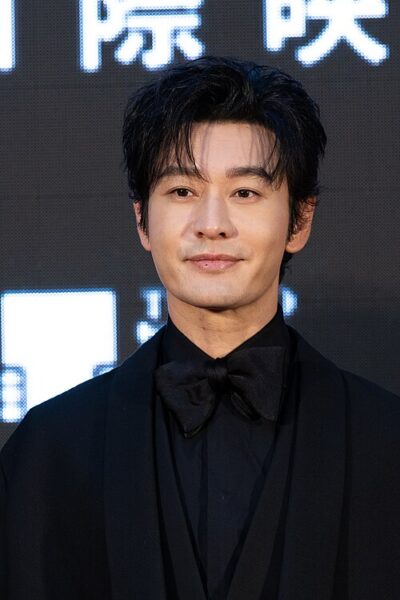
Huang Xiaoming
Huang Xiaoming is a Chinese actor and singer. Born November 13, 1977, in Qingdao. Educated at Beijing Film Academy and Qingdao No. 1 High School.
Facts
14 facts · 1 confirmed by two sources · 4 cited · 9 from one source
Where this comes from
Papalocal keeps its own record. It started from these sources; what each one said is kept here as it was copied, so a change on their side never changes this page by itself. Tap one to read its version.
What Wikidata says · copied November 17, 2026 · revision 2553979706
- Described as
- Chinese actor and singer
- Other names
- Xiaoming Huang, Wong Hiu-Ming, Mark Huang, Huang Xiao-Ming
- Born
- November 13, 1977
- Born in
- Qingdao · 1 reference
- Citizen of
- People's Republic of China
- Occupation
- model; singer (2007–) · 1 reference; television actor (1999–); film actor · 1 reference; director · 1 reference
- Education
- Beijing Film Academy (–2000); Qingdao No. 1 High School
- Instrument
- voice
- Spouse
- Angelababy (2015–2022)
- Mother
- Zhang Suxia
- Website
- http://www.huangxiaoming.cn/
- Wikipedias with a page
- 24
Wikidata item Q701194 (wikidata.org/wiki/Q701194), public domain (CC0). Copied November 17, 2026.
What Wikipedia says · copied November 17, 2026 · revision 1372394772
Huang Xiaoming or Mark Huang (Chinese: 黄晓明; pinyin: Huáng Xiǎomíng, born 13 November 1977) is a Chinese actor and singer. Huang rose to prominence for playing Emperor Wu of Han in the television series The Prince of Han Dynasty (2001), followed by popular series such as The Return of the Condor Heroes (2006), Shanghai Bund (2007), The Patriot Yue Fei (2013), Cruel Romance (2015), Nirvana in Fire 2 (2017), Winter Begonia (2020), as well as films The Message (2009), The Last Tycoon (2012), and American Dreams in China (2013).
- Born, in its opening lines
- November 13, 1977
From the Wikipedia article “Huang Xiaoming” (en.wikipedia.org/wiki/Huang_Xiaoming), by its contributors, under CC BY-SA 4.0 (creativecommons.org/licenses/by-sa/4.0/). Copied November 17, 2026; not changed.
Confirmed Two sources agree. Cited One source, and it names where it got it. One source One source, without a reference of its own. Sources disagree The sources disagree. We show the best-supported value and keep theirs below.
