
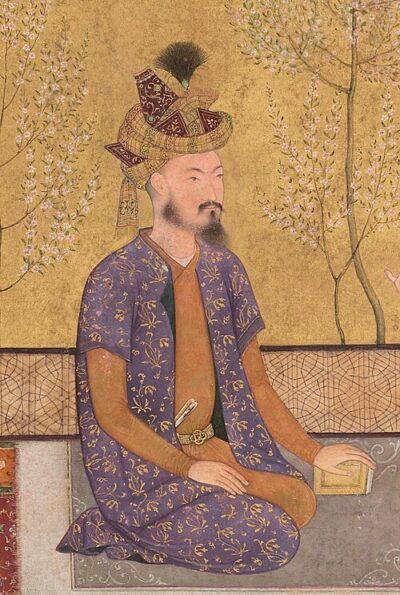
Humayun
Humayun was a second Mughal emperor from 1530 to 1540 and 1555 to 1556. Born March 6, 1508, in Kabul. Died January 27, 1556, in Delhi. Positions held include Mughal emperor (2 times) (1530–1556).
Facts
29 facts · 2 confirmed by two sources · 14 cited · 13 from one source
Where this comes from
Papalocal keeps its own record. It started from these sources; what each one said is kept here as it was copied, so a change on their side never changes this page by itself. Tap one to read its version.
What Wikidata says · copied November 16, 2026 · revision 2557926193
- Described as
- second Mughal emperor from 1530 to 1540 and 1555 to 1556
- Other names
- Mirza Nasiruddin Baig Mohammad Humayun, Abu'l Muzaffar Nasir ud-din Muhammad Humayun, Nasir ud-Din Muhammad, Naser al-Din Muhammad, Nāṣer-al-Din Moḥammad, Humāyūn Pādešāh, Humayun Padishah, Jahānbāni Jannat-āšiāni, Jannat-Ashyani
- Born
- March 6, 1508 · 1 reference; March 6, 1508 · 1 reference
- Died
- January 27, 1556
- Born in
- Kabul · 2 references
- Died in
- Delhi · 2 references
- Buried in
- Humayun's Tomb · 1 reference
- Cause of death
- falling · 1 reference
- Occupation
- monarch · 1 reference; poet · 1 reference
- Positions held
- Mughal emperor (2 times) (1530–1556)
- Spouse
- Bega Begum; Gunwar Bibi; Hamida Banu Begum · 2 references; Mah Chuchak Begum
- Children
- Akbar · 1 reference; Al-aman Mirza; Mirza Muhammad Hakim; Bakshi Banu Begum; Bakht-un-Nissa Begum · 1 reference; Sakina Banu Begum
- Father
- Babur · 1 reference
- Mother
- Maham Begum · 1 reference
- Siblings
- Gulbadan Begum; Fakhr-un-Nissa; Gulchehra Begum; Kamran Mirza · 1 reference; Askari Mirza · 1 reference; Mirza Hindal · 1 reference; Gulrukh Begum · 1 reference
- Religion
- Islam · 1 reference
- Wikipedias with a page
- 81
Wikidata item Q486188 (wikidata.org/wiki/Q486188), public domain (CC0). Copied November 16, 2026.
What Wikipedia says · copied November 16, 2026 · revision 1384685677
Nasir al-Din Muhammad (Persian: نصیرالدین محمد, 6 March 1508 – 27 January 1556), commonly known by his regnal name Humayun (Persian: همایون, Persian pronunciation: [hu.mɑː.juːn]), was the second Mughal emperor, who ruled much of what is now eastern Afghanistan, Bangladesh, Northern India, and Pakistan from 1530 to 1540 and again from 1555 to his death in 1556. At the time of his death, the Mughal Empire spanned almost one million square kilometers.
On 26 December 1530, Humayun succeeded his father Babur to the throne of Delhi as ruler of the Mughal territories in the Indian subcontinent. Humayun was an inexperienced ruler when he came to power at the age of 22. His half-brother Kamran Mirza inherited Kabul and Kandahar, the northernmost parts of their father's empire; the two half-brothers became bitter rivals.
Early in his reign, Humayun lost his entire empire to Sher Shah Suri but regained it 15 years later with Safavid aid. His return from Persia was accompanied by a large retinue of Persian noblemen, signaling an important change in Mughal court culture. The Central Asian origins of the dynasty were largely overshadowed by the influences of Persian art, architecture, language, and literature. To this day, stone carvings and thousands of Persian manuscripts in India dating from the time of Humayun remain in the subcontinent. Following his return to power, Humayun quickly expanded the Empire, leaving a substantial legacy for his son, Akbar.
- Born, in its opening lines
- March 6, 1508
- Died, in its opening lines
- January 27, 1556
From the Wikipedia article “Humayun” (en.wikipedia.org/wiki/Humayun), by its contributors, under CC BY-SA 4.0 (creativecommons.org/licenses/by-sa/4.0/). Copied November 16, 2026; not changed.
Confirmed Two sources agree. Cited One source, and it names where it got it. One source One source, without a reference of its own. Sources disagree The sources disagree. We show the best-supported value and keep theirs below.
