
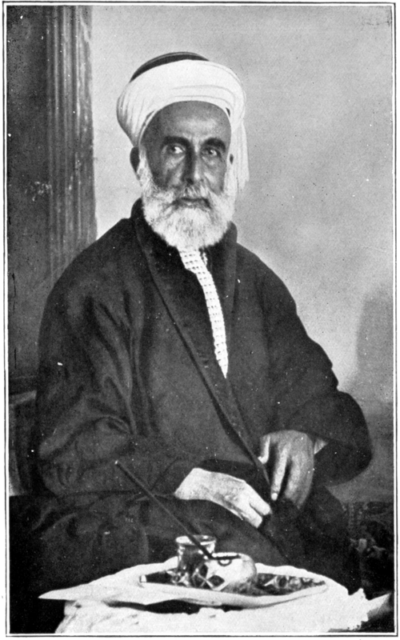
Hussein bin Ali
Hussein bin Ali was a Sharif and Emir of Mecca, then King of Hejaz and Sharifian Caliph. Born 1853, in Istanbul. Died June 4, 1931, in Amman. Positions held include King of Hejaz (1916–1924), Sharif of Mecca (1908–1924) and caliph (1924–1931). Awards include Knight Grand Cross of the Order of the Bath, Supreme Order of the Renaissance and Order of Muhammad Ali.
Facts
28 facts · 2 confirmed by two sources · 8 cited · 18 from one source
Where this comes from
Papalocal keeps its own record. It started from these sources; what each one said is kept here as it was copied, so a change on their side never changes this page by itself. Tap one to read its version.
What Wikidata says · copied November 16, 2026 · revision 2557926260
- Described as
- Sharif and Emir of Mecca, then King of Hejaz and Sharifian Caliph (1854–1931)
- Other names
- Hussein bin Ali Al-Hashimi
- Born
- 1853 · 3 references
- Died
- June 4, 1931 · 3 references
- Born in
- Istanbul · 1 reference
- Died in
- Amman · 2 references
- Buried in
- Al-Aqsa Mosque · 2 references
- Name at birth
- الحسين بن علي بن محمد بن عبد المعين
- Citizen of
- Ottoman Empire (–1916); Kingdom of Hejaz (1916–1925); Emirate of Transjordan (1925–)
- Occupation
- politician; caliph
- Positions held
- King of Hejaz (1916–1924); Sharif of Mecca (1908–1924); caliph (1924–1931) · 3 references
- Awards
- Knight Grand Cross of the Order of the Bath (1920); Supreme Order of the Renaissance; Order of Muhammad Ali; Order of Osmanieh; Grand Cordon of the order of Nichan Iftikhar · 1 reference; Grand Cross of the Legion of Honour · 1 reference
- Spouse
- Adila Khanum · 1 reference
- Children
- Abdullah I of Jordan; Ali of Hejaz; Faisal I of Iraq; Prince Zeid bin Hussein
- Father
- Ali bin Mohammed bin Abdul Moin
- Mother
- Bezm-i Cihan · 1 reference
- Religion
- Islam
- Wikipedias with a page
- 48
Wikidata item Q128906 (wikidata.org/wiki/Q128906), public domain (CC0). Copied November 16, 2026.
What Wikipedia says · copied November 16, 2026 · revision 1385543972
Hussein bin Ali al-Hashimi (Arabic: ٱلْحُسَيْن بِن عَلِي ٱلْهَاشِمِي, romanized: al-Ḥusayn bin 'Alī al-Hāshimī ; 1 May 1853 – 4 June 1931) was a Hejazi leader from the Banu Qatadah branch of the Banu Hashim clan who was the Sharif and Emir of Mecca from 1908 and, after proclaiming the Great Arab Revolt against the Ottoman Empire, King of the Hejaz, even if he refused this title, from 1916 to 1924. He accepted the Caliphate after delegations from the Hejaz and neighboring regions urged him to assume it, staying in power until 1925 when Hejaz was invaded by the Sultanate of Nejd. His Caliphate was opposed by the British and French empires, the Zionists and the Wahhabis alike. He received symbolic support from certain Hejazi religious circles and some Arab delegations, but broad Muslim recognition did not materialize. Later Arab nationalist writers sometimes portrayed him as the father of modern pan-Arabism, but some historians argue that the Hashemites were still newer converts to Arabism in 1916 and were not early Arab nationalists.
In 1908, in the aftermath of the Young Turk Revolution, Hussein was appointed Sharif of Mecca by the Ottoman sultan Abdul Hamid II. His relationship with the Ottoman government deteriorated after the Committee of Union and Progress took power, due to CUP efforts to centralize administration in the Hijaz and reduce the Sharif’s traditional autonomy. In 1916, with the promise of British support for Arab independence, although it is debated as to what extent the British were influential in his choice, he revolted against the Ottomans only after attempts to secure hereditary control of the Hijaz through negotiation with the Ottoman government failed, accusing the Committee of Union and Progress of violating tenets of Islam and limiting the power of the sultan-caliph, framing the revolt as a defense of the historic rights of the Hejaz rather than a modern nationalist movement. While his armies, led by his sons, were engaged in fighting the Ottoman and German troops in the Middle East, the initial stage of the insurrection was carried out entirely with Hejazi forces, and Arabs in Syria and Iraq never actually rose against the Turks. Hussein supported the Armenians during the Armenian genocide and saved up to 4,000 of them. In the aftermath of World War I, Hussein refused to ratify the Treaty of Versailles, in protest against the Balfour Declaration, a document supporting the Jewish settlers in Palestine, and the establishment of British and French mandates in Syria, Iraq, and Palestine. His sons Faisal and Abdullah were made rulers of Iraq and Transjordan respectively in 1921.
He later refused to sign the Anglo-Hashemite Treaty and thus was left in a very precarious position, as the British progressively decided to stop supporting him after the proclamation of his caliphate and the refusal to sign any treaty with them. Britain’s withdrawal of support left Hussein vulnerable to Ibn Saʻud’s expanding power, who promptly launched an invasion of the Kingdom of Hejaz. In October 1924, facing defeat by Ibn Saud, he abdicated and was succeeded as king by his eldest son Ali bin Hussein. After Hejaz was subsequently completely invaded by the Wahhabi armies of the Ikhwan, on 23 December 1925, Hussein surrendered to the Saudis, bringing the Kingdom of Hejaz, the Sharifate of Mecca and the Sharifian Caliphate to an end.
Hussein was forcibly removed from Aqaba by the British and deported to Cyprus in June 1925, where he lived under a form of supervised residence rather than formal imprisonment. His exile was motivated by British fears that his presence in Aqaba could provoke conflict with Ibn Saʿūd, not by immediate medical concerns. He was relocated from Cyprus to Amman in late 1930 after a significant decline in his health, and died there on 4 June 1931. He was buried at the Haram al-Sharif in Jerusalem, near al-Aqsa Mosque, with the ceremony supervised by British authorities.
- Born, in its opening lines
- May 1, 1853
- Died, in its opening lines
- June 4, 1931
From the Wikipedia article “Hussein, King of Hejaz” (en.wikipedia.org/wiki/Hussein,_King_of_Hejaz), by its contributors, under CC BY-SA 4.0 (creativecommons.org/licenses/by-sa/4.0/). Copied November 16, 2026; not changed.
Confirmed Two sources agree. Cited One source, and it names where it got it. One source One source, without a reference of its own. Sources disagree The sources disagree. We show the best-supported value and keep theirs below.
