
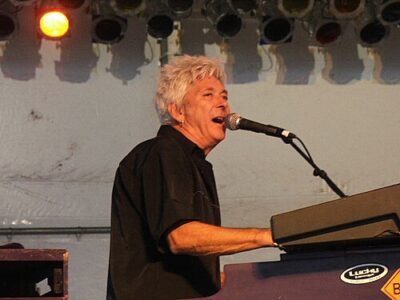
Ian McLagan
Ian McLagan was an English keyboardist. Born May 12, 1945, in Hounslow. Died December 3, 2014, in Austin.
Facts
28 facts · 2 confirmed by two sources · 4 cited · 22 from one source
Where this comes from
Papalocal keeps its own record. It started from these sources; what each one said is kept here as it was copied, so a change on their side never changes this page by itself. Tap one to read its version.
What Wikidata says · copied November 16, 2026 · revision 2567259020
- Described as
- English keyboardist (1945–2014)
- Other names
- Ian Patrick McLagan
- Born
- May 12, 1945 · 6 references
- Died
- December 3, 2014 · 5 references
- Born in
- Hounslow
- Died in
- Austin · 1 reference
- Buried in
- Bouncer's Lane Cemetery · 1 reference
- Cause of death
- stroke
- Citizen of
- United Kingdom; United States
- Occupation
- autobiographer; composer; musician · 1 reference; pianist; songwriter; rock musician · 1 reference
- Member of
- Small Faces; Faces
- Genre
- rock and roll; rhythm and blues; hard rock; psychedelic pop; blues rock
- Instrument
- keyboard instrument; organ; piano; bass guitar
- Record label
- Mercury Records
- Spouse
- Kim McLagan (1978–2006)
- Website
- http://www.ianmclagan.com/
- Wikipedias with a page
- 21
Wikidata item Q952491 (wikidata.org/wiki/Q952491), public domain (CC0). Copied November 16, 2026.
What Wikipedia says · copied November 16, 2026 · revision 1384368133
Ian Patrick McLagan (; 12 May 1945 – 3 December 2014) was an English keyboardist, best known as a member of the rock bands Small Faces and Faces. He also collaborated with the Rolling Stones and led his own band from the late 1970s. He was inducted into the Rock and Roll Hall of Fame in 2012.
- Born, in its opening lines
- May 12, 1945
- Died, in its opening lines
- December 3, 2014
From the Wikipedia article “Ian McLagan” (en.wikipedia.org/wiki/Ian_McLagan), by its contributors, under CC BY-SA 4.0 (creativecommons.org/licenses/by-sa/4.0/). Copied November 16, 2026; not changed.
Confirmed Two sources agree. Cited One source, and it names where it got it. One source One source, without a reference of its own. Sources disagree The sources disagree. We show the best-supported value and keep theirs below.
