
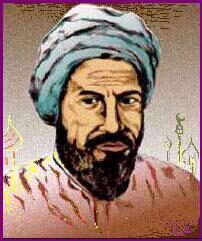
Ibn al-Nafis
Ibn al-Nafis was an Arab polymath and physician. Born 1215, in Damascus. Died December 17, 1288, in Cairo. Known for Commentary on Anatomy in Avicenna's Canon and Theologus Autodidactus.
Facts
12 facts · 1 confirmed by two sources · 2 cited · 8 from one source · 1 where the sources disagree
What’s different
- Born: we show 1215 (Sources disagree). Wikidata also lists 1210
- Died: we show December 17, 1288 (Confirmed). Wikidata also lists 1280
Where this comes from
Papalocal keeps its own record. It started from these sources; what each one said is kept here as it was copied, so a change on their side never changes this page by itself. Tap one to read its version.
What Wikidata says · copied November 16, 2026 · revision 2562521785
- Described as
- Arab polymath and physician (1213–1288)
- Other names
- Theologus Autodidactus, Ibn an-Nafis, ʿAlāʾ al-Dīn Abū al-Ḥasan ʿAlī ibn Abī Ḥazm al-Qarashī
- Born
- 1215 · 2 references; 1210 · 1 reference
- Died
- December 17, 1288; 1280 · 1 reference
- Born in
- Damascus
- Died in
- Cairo
- Buried in
- Rahmaniya
- Occupation
- philosopher; writer · 2 references; physician · 2 references; Islamic jurist
- Known for
- Commentary on Anatomy in Avicenna's Canon; Theologus Autodidactus
- Field
- medicine
- Wikipedias with a page
- 51
Wikidata item Q319146 (wikidata.org/wiki/Q319146), public domain (CC0). Copied November 16, 2026.
What Wikipedia says · copied November 16, 2026 · revision 1385635446
ʿAlāʾ al-Dīn Abū al-Ḥasan ʿAlī ibn Abī Ḥazm al-Qarashī (Arabic: علاء الدين أبو الحسن عليّ بن أبي حزم القرشي; c. 1210/1211 - 1288/1289 CE), known as Ibn al-Nafīs (Arabic: ابن النفيس), was an Arab polymath whose areas of work included medicine, surgery, physiology, anatomy, biology, Islamic studies, jurisprudence, and philosophy. He is known for being the first to describe the pulmonary circulation of the blood. The work of Ibn al-Nafis regarding the right sided (pulmonary) circulation pre-dates the later work (1628) of William Harvey's De motu cordis. Both theories attempt to explain circulation. The 2nd century Greek physician Galen's theory about the physiology of the circulatory system remained unchallenged until the works of Ibn al-Nafis, who has therefore been described as "the father of circulatory physiology".
As an early anatomist, Ibn al-Nafis also performed several human dissections during the course of his work, making several important discoveries in the fields of physiology and anatomy. Besides his famous discovery of the pulmonary circulation, he also gave an early insight of the coronary and capillary circulations. He was also appointed as the chief physician at al-Naseri Hospital founded by Sultan Saladin. Due to his discoveries, he has been described by some as “the second Avicenna”.
Apart from medicine, Ibn al-Nafis studied jurisprudence, literature and theology. He was an expert on the Shafi'i school of jurisprudence and an expert physician. The number of medical textbooks written by Ibn al-Nafis is estimated at more than 110 volumes.
- Born, in its opening lines
- 1211
- Died, in its opening lines
- 1288
From the Wikipedia article “Ibn al-Nafis” (en.wikipedia.org/wiki/Ibn_al-Nafis), by its contributors, under CC BY-SA 4.0 (creativecommons.org/licenses/by-sa/4.0/). Copied November 16, 2026; not changed.
Confirmed Two sources agree. Cited One source, and it names where it got it. One source One source, without a reference of its own. Sources disagree The sources disagree. We show the best-supported value and keep theirs below.
