
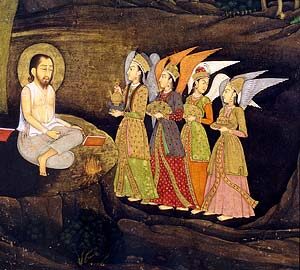
Ibrahim ibn Adham was an ascetic Sufi saint. Born May 13, 718, in Balkh. Died 776, in Gabala.
Facts
12 facts · 0 confirmed by two sources · 4 cited · 8 from one source
Where this comes from
Papalocal keeps its own record. It started from these sources; what each one said is kept here as it was copied, so a change on their side never changes this page by itself. Tap one to read its version.
What Wikidata says · copied November 16, 2026 · revision 2496107818
- Described as
- ascetic Sufi saint
- Born
- May 13, 718
- Died
- 776 · 1 reference
- Born in
- Balkh · 1 reference
- Died in
- Gabala · 1 reference
- Buried in
- Gabala
- Citizen of
- Umayyad Caliphate (–750); Abbasid Caliphate (750–)
- Occupation
- ascetic; theologian; Sufi · 1 reference
- Religion
- Islam; Sunni Islam
- Wikipedias with a page
- 31
Wikidata item Q2665215 (wikidata.org/wiki/Q2665215), public domain (CC0). Copied November 16, 2026.
What Wikipedia says · copied November 16, 2026 · revision 1367864599
Ibrahim ibn Adham (Arabic: إبراهيم بن أدهم); also called Ibrahim al-Balkhi and Ebrahim-e Adham (Persian: ابراهیم ادهم); c. 718 – c. 782 / AH c. 100 – c. 165 is one of the most prominent of the early Sufi saints known for his zuhd (asceticism).
The story of his conversion is one of the most celebrated in Sufi legend, mentioned in the Tazkirat al-Awliya of Attar of Nishapur. Sufi tradition ascribes to Ibrahim countless acts of righteousness and a humble lifestyle, which contrasted sharply with his early life as the king of Balkh. As recounted by Abu Nu'aym al-Isfahani, Ibrahim emphasized the importance of stillness and meditation for asceticism. Rumi extensively described the legend of Ibrahim in his Masnavi. The most famous of Ibrahim's students is Shaqiq al-Balkhi (d. 810).
From the Wikipedia article “Ibrahim ibn Adham” (en.wikipedia.org/wiki/Ibrahim_ibn_Adham), by its contributors, under CC BY-SA 4.0 (creativecommons.org/licenses/by-sa/4.0/). Copied November 16, 2026; not changed.
Confirmed Two sources agree. Cited One source, and it names where it got it. One source One source, without a reference of its own. Sources disagree The sources disagree. We show the best-supported value and keep theirs below.
