
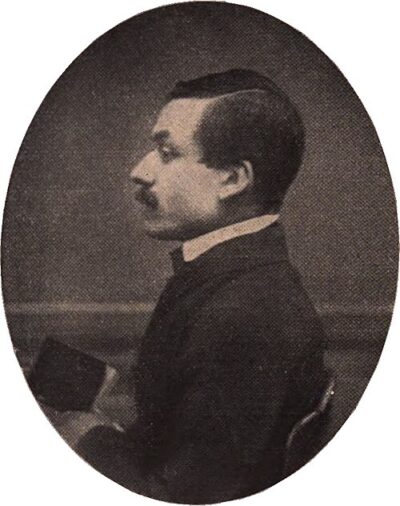
İbrahim Şinasi
İbrahim Şinasi was an Ottoman journalist. Born August 5, 1826, in Istanbul. Died September 13, 1871, in Istanbul. Known for The Wedding of a Poet.
Facts
16 facts · 2 confirmed by two sources · 4 cited · 10 from one source
Where this comes from
Papalocal keeps its own record. It started from these sources; what each one said is kept here as it was copied, so a change on their side never changes this page by itself. Tap one to read its version.
What Wikidata says · copied November 17, 2026 · revision 2567082807
- Described as
- Ottoman journalist (1826-1871)
- Other names
- Ibrahim Sinasi, Ibrahim Schinasi
- Born
- August 5, 1826
- Died
- September 13, 1871 · 1 reference
- Born in
- Istanbul · 1 reference
- Died in
- Istanbul
- Cause of death
- brain tumor
- Name at birth
- Ibrahim Shinazi
- Citizen of
- Ottoman Empire · 1 reference
- Occupation
- poet; journalist; translator; writer · 2 references; playwright; politician
- Political party
- New Ottomans · 1 reference
- Known for
- The Wedding of a Poet
- Religion
- Islam · 1 reference
- Wikipedias with a page
- 25
Wikidata item Q390560 (wikidata.org/wiki/Q390560), public domain (CC0). Copied November 17, 2026.
What Wikipedia says · copied November 17, 2026 · revision 1374628875
İbrahim Şinasi Efendi (Ottoman Turkish: ابراهيم شناسى أفندی, romanized: ʾİbrâhîm Şinâsî ʾEfendî; 5 August 1826 – 13 September 1871) was a pioneering Ottoman intellectual, founder of Turkish dramaturgy, author, journalist, translator, playwright, linguist and newspaper editor. He was an innovator across several fields: authoring one of the earliest examples of an Ottoman play, encouraging the translation of French poetry into Turkish, simplifying the script used for writing the Ottoman Turkish language, and being one of the first Ottoman writers to write specifically for the broader public. Şinasi used his newspapers, Tercüman-ı Ahvâl and Tasvîr-i Efkâr, to promote the proliferation of European Enlightenment ideals during the Tanzimat period, and he made the education of the literate Ottoman public his personal vocation. Though many of Şinasi's projects were incomplete at the time of his death, "he was at the forefront of a number of fields and put his stamp on the development of each field so long as it contained unsolved problems."
Şinasi was an early proponent of a constitution for the Empire. Along with his colleague and friend Namık Kemal, Şinasi was one of the foremost leaders of the Young Ottomans, a secret society of Ottoman Turkish intellectuals pushing for further reform in the Ottoman Empire after Tanzimat in order to modernize and revitalize it by bringing it into line with the rest of Europe. Although Şinasi died before their goals for reform came to fruition, the Young Ottomans' efforts directly led to the first attempt at constitutional monarchy in the Empire in 1876, when the short-lived First Constitutional Era ushered in the writing of an Ottoman constitution and the creation of a bicameral parliament. Through his work as a political activist and one of the foremost literary figures of his time, Şinasi laid the groundwork in the minds of the public for contemporary and later reforms in the Ottoman Empire and, later, the modern Republic of Turkey.
- Born, in its opening lines
- August 5, 1826
- Died, in its opening lines
- September 13, 1871
From the Wikipedia article “İbrahim Şinasi” (en.wikipedia.org/wiki/İbrahim_Şinasi), by its contributors, under CC BY-SA 4.0 (creativecommons.org/licenses/by-sa/4.0/). Copied November 17, 2026; not changed.
Confirmed Two sources agree. Cited One source, and it names where it got it. One source One source, without a reference of its own. Sources disagree The sources disagree. We show the best-supported value and keep theirs below.
