
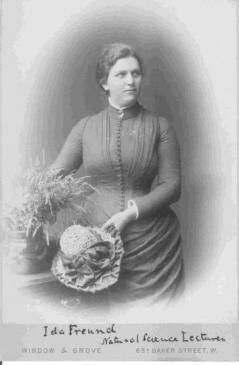
Ida Freund
Ida Freund was an Austrian-British chemist. Born April 15, 1863, in Vienna. Died May 15, 1914, in Cambridge. Educated at Girton College.
Facts
12 facts · 1 confirmed by two sources · 5 cited · 5 from one source · 1 where the sources disagree
What’s different
- Born: we show April 15, 1863 (Sources disagree). Wikipedia says April 5, 1863
Where this comes from
Papalocal keeps its own record. It started from these sources; what each one said is kept here as it was copied, so a change on their side never changes this page by itself. Tap one to read its version.
What Wikidata says · copied November 18, 2026 · revision 2568283803
- Described as
- Austrian-British chemist
- Born
- April 15, 1863 · 1 reference
- Died
- May 15, 1914
- Born in
- Vienna · 1 reference
- Died in
- Cambridge · 1 reference
- Citizen of
- United Kingdom of Great Britain and Ireland; Austrian Empire · 1 reference; United Kingdom · 1 reference
- Occupation
- chemist · 1 reference; writer · 1 reference
- Worked for
- Newnham College (1893–1913) · 2 references
- Education
- Girton College (1882–) · 2 references
- Field
- chemistry
- Wikipedias with a page
- 22
Wikidata item Q5987009 (wikidata.org/wiki/Q5987009), public domain (CC0). Copied November 18, 2026.
What Wikipedia says · copied November 18, 2026 · revision 1382171373
Ida Freund (5 April 1863 – 15 May 1914) was the first woman to be a university chemistry lecturer in the United Kingdom. She is known for her influence on science teaching, particularly the teaching of women and girls. She wrote two key chemistry textbooks and invented the idea of baking periodic table cupcakes, as well as inventing a gas measuring tube, which was named after her.
- Born, in its opening lines
- April 5, 1863
- Died, in its opening lines
- May 15, 1914
From the Wikipedia article “Ida Freund” (en.wikipedia.org/wiki/Ida_Freund), by its contributors, under CC BY-SA 4.0 (creativecommons.org/licenses/by-sa/4.0/). Copied November 18, 2026; not changed.
Confirmed Two sources agree. Cited One source, and it names where it got it. One source One source, without a reference of its own. Sources disagree The sources disagree. We show the best-supported value and keep theirs below.
