
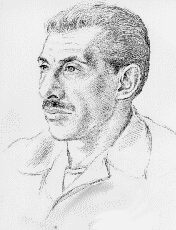
Idries Shah
Idries Shah was an Afghan Sufi teacher. Born June 16, 1924, in Shimla. Died November 23, 1996, in London. Educated at City of Oxford High School for Boys.
Facts
18 facts · 2 confirmed by two sources · 1 cited · 15 from one source
Where this comes from
Papalocal keeps its own record. It started from these sources; what each one said is kept here as it was copied, so a change on their side never changes this page by itself. Tap one to read its version.
What Wikidata says · copied November 16, 2026 · revision 2559572710
- Described as
- Afghan Sufi teacher (1924-1996)
- Other names
- Arkon Daraul, Indries Shah, Sayed Idries el-Hashimi, Idris Shah, Shah Idries
- Born
- June 16, 1924 · 3 references
- Died
- November 23, 1996 · 4 references
- Born in
- Shimla
- Died in
- London
- Buried in
- Brookwood Cemetery
- Citizen of
- United Kingdom
- Occupation
- writer · 1 reference; children's writer; teacher; collector of fairy tales
- Education
- City of Oxford High School for Boys
- Children
- Saira Shah; Safia Shah; Tahir Shah
- Mother
- Saira Elizabeth Luiza Shah
- Siblings
- Omar Ali-Shah; Amina Shah
- Religion
- Islam
- Wikipedias with a page
- 31
Wikidata item Q505466 (wikidata.org/wiki/Q505466), public domain (CC0). Copied November 16, 2026.
What Wikipedia says · copied November 16, 2026 · revision 1382487381
Idries Shah (; Hindi: इदरीस शाह, Urdu: ادریس شاه; 16 June 1924 – 23 November 1996), also known as Idris Shah, Indries Shah, né Sayed Idries el-Hashimi (Arabic: سيد إدريس هاشمي) and by the pen name Arkon Daraul, was an Afghan author, thinker and teacher in the Sufi tradition. Shah wrote over three dozen books on topics ranging from psychology and spirituality to travelogues and culture studies.
Born in British India, the descendant of a family of Afghan nobles on his father's side and a Scottish mother, Shah grew up mainly in England. His early writings examined magic and witchcraft. In 1960 he established a publishing house, Octagon Press, producing translations of Sufi classics as well as titles of his own. His seminal work was The Sufis, which appeared in 1964 and was well received internationally. In 1965, Shah founded the Institute for Cultural Research, a London-based educational charity devoted to the study of human behaviour and culture. A similar organisation, the Institute for the Study of Human Knowledge (ISHK), was established in the United States under the directorship of Stanford University psychology professor Robert Ornstein, whom Shah appointed as his deputy in the U.S.
In his writings, Shah presented Sufism as a universal form of wisdom that predated Islam. Emphasizing that Sufism was not static but always adapted itself to the current time, place and people, he framed his teaching in Western psychological terms. Shah made extensive use of traditional teaching stories and parables, texts that contained multiple layers of meaning designed to trigger insight and self-reflection in the reader. He is perhaps best known for his collections of humorous Mulla Nasrudin stories.
Shah was at times criticized by orientalists who questioned his credentials and background. His role in the controversy surrounding a new translation of the Rubaiyat of Omar Khayyam, published by his friend Robert Graves and his older brother Omar Ali-Shah, came in for particular scrutiny. However, he also had many notable defenders, chief among them the novelist Doris Lessing. Shah came to be recognized as a spokesman for Sufism in the West and lectured as a visiting professor at a number of Western universities.
- Born, in its opening lines
- June 16, 1924
- Died, in its opening lines
- November 23, 1996
From the Wikipedia article “Idries Shah” (en.wikipedia.org/wiki/Idries_Shah), by its contributors, under CC BY-SA 4.0 (creativecommons.org/licenses/by-sa/4.0/). Copied November 16, 2026; not changed.
Confirmed Two sources agree. Cited One source, and it names where it got it. One source One source, without a reference of its own. Sources disagree The sources disagree. We show the best-supported value and keep theirs below.
