
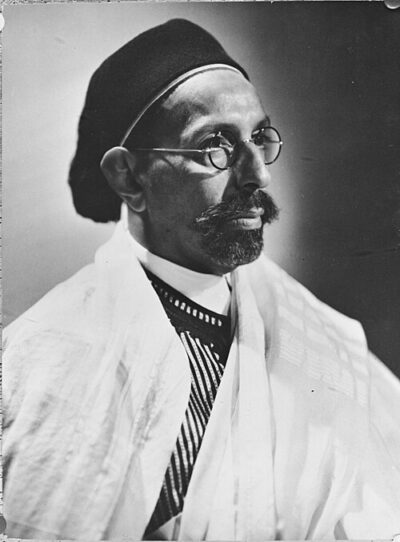
Idris I of Libya
Idris I of Libya was a King of Kingdom of Libya from 1951 to 1969. Born March 12, 1889, in Jaghbub. Died May 25, 1983, in Cairo. Positions held include king (1951–1969). Awards include Knight Grand Cross of the Order of the British Empire, Grand Cordon of the National Order of the Cedar and Grand Cross of the Order of the Redeemer.
Facts
20 facts · 1 confirmed by two sources · 1 cited · 17 from one source · 1 where the sources disagree
What’s different
- Born: we show March 12, 1889 (Sources disagree). Wikidata also lists March 12, 1890
Where this comes from
Papalocal keeps its own record. It started from these sources; what each one said is kept here as it was copied, so a change on their side never changes this page by itself. Tap one to read its version.
What Wikidata says · copied November 16, 2026 · revision 2558581482
- Described as
- King of Kingdom of Libya from 1951 to 1969
- Born
- March 12, 1889 · 1 reference; March 12, 1890 · 1 reference
- Died
- May 25, 1983 · 2 references
- Born in
- Jaghbub
- Died in
- Cairo · 2 references
- Buried in
- Al-Baqi'
- Citizen of
- Kingdom of Libya · 1 reference
- Occupation
- politician
- Positions held
- king (1951–1969)
- Awards
- Knight Grand Cross of the Order of the British Empire; Grand Cordon of the National Order of the Cedar; Grand Cross of the Order of the Redeemer; Grand Cross of the Legion of Honour; Knight Grand Cross of the Order of Merit of the Italian Republic; Order of the Nile; Order of al-Hussein bin Ali; Order of Independence
- Spouse
- Fatimah el-Sharif
- Father
- Muhammed Mehdi Senusi
- Siblings
- Muhammad ar-Reda
- Religion
- Islam
- Wikipedias with a page
- 58
Wikidata item Q116430 (wikidata.org/wiki/Q116430), public domain (CC0). Copied November 16, 2026.
What Wikipedia says · copied November 16, 2026 · revision 1382925856
Idris (Arabic: إدريس, romanized: Idrīs, Muhammad Idris bin Muhammad al-Mahdi al-Sanusi; 13 March 1890 – 25 May 1983) was King of Libya from 24 December 1951 until his ousting in the 1969 Libyan revolution. He ruled over the United Kingdom of Libya from 1951 to 1963, after which the country became known as simply the Kingdom of Libya. Idris had served as Emir of Cyrenaica and Tripolitania from the 1920s until 1951. He also headed the Sanusi order.
Idris was born into the Senussi Order. When his cousin Ahmed Sharif as-Senussi abdicated as leader of the Order, Idris took his position. The Senussi campaign was taking place, with the British and Italians fighting the Order. Idris put an end to the hostilities and, through the Modus vivendi of Acroma, abandoned Ottoman protection. Between 1919 and 1920, Italy recognized Senussi control over most of Cyrenaica in exchange for the recognition of Italian sovereignty by Idris. Idris then led his Order in an unsuccessful attempt to conquer the eastern part of the Tripolitanian Republic.
Following the Second World War, the United Nations General Assembly called for Libya to be granted independence. It established the United Kingdom of Libya through the unification of Cyrenaica, Tripolitania and Fezzan, appointing Idris to rule it as king. Wielding significant political influence in the impoverished country, Idris banned political parties and, in 1963, replaced Libya's federal system with a unitary state. He established links to the Western powers, allowing the United Kingdom and United States to open military bases in the country in return for economic aid. After oil was discovered in Libya in 1959, he oversaw the emergence of a growing oil industry that rapidly aided economic growth. Idris's regime was weakened by growing Arab nationalist and Arab socialist sentiment in Libya as well as rising frustration at the country's high levels of corruption and close links with Western nations. While in Turkey for medical treatment, Idris was deposed in the 1969 Libyan revolution led by army officers under Muammar Gaddafi.
- Born, in its opening lines
- March 13, 1890
- Died, in its opening lines
- May 25, 1983
From the Wikipedia article “Idris of Libya” (en.wikipedia.org/wiki/Idris_of_Libya), by its contributors, under CC BY-SA 4.0 (creativecommons.org/licenses/by-sa/4.0/). Copied November 16, 2026; not changed.
Confirmed Two sources agree. Cited One source, and it names where it got it. One source One source, without a reference of its own. Sources disagree The sources disagree. We show the best-supported value and keep theirs below.
