
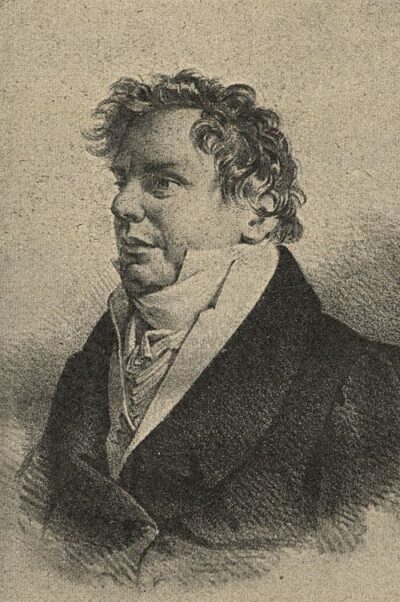
Ignaz Schuppanzigh was an Austrian musician. Born July 20, 1776, in Vienna. Died March 2, 1830, in Vienna.
Facts
12 facts · 2 confirmed by two sources · 6 cited · 4 from one source
What’s different
- Died: we show March 2, 1830 (Confirmed). Wikidata also lists May 2, 1830
Where this comes from
Papalocal keeps its own record. It started from these sources; what each one said is kept here as it was copied, so a change on their side never changes this page by itself. Tap one to read its version.
What Wikidata says · copied November 18, 2026 · revision 2571539413
- Described as
- Austrian musician
- Born
- July 20, 1776 · 2 references
- Died
- March 2, 1830 · 3 references; May 2, 1830 · 1 reference
- Born in
- Vienna · 1 reference
- Died in
- Vienna · 1 reference
- Occupation
- conductor; violinist · 1 reference; composer · 1 reference; music director · 1 reference; musician · 1 reference
- Genre
- classical music
- Instrument
- violin
- Spouse
- Barbara Killitschky (1807–) · 1 reference
- Wikipedias with a page
- 20
Wikidata item Q522907 (wikidata.org/wiki/Q522907), public domain (CC0). Copied November 18, 2026.
What Wikipedia says · copied November 18, 2026 · revision 1370776570
Ignaz Schuppanzigh (20 July 1776 – 2 March 1830) was an Austrian violinist and friend of Beethoven, and leader of Count Razumovsky's private string quartet. Schuppanzigh and his quartet premiered many of Beethoven's string quartets, and in particular, the late string quartets. The Razumovsky quartet, which Schuppanzigh founded in late 1808, is considered to be the first professional string quartet. Until the founding of this quartet, quartet music was played primarily by amateurs or by professional musicians who joined together on an ad hoc basis.
- Born, in its opening lines
- July 20, 1776
- Died, in its opening lines
- March 2, 1830
From the Wikipedia article “Ignaz Schuppanzigh” (en.wikipedia.org/wiki/Ignaz_Schuppanzigh), by its contributors, under CC BY-SA 4.0 (creativecommons.org/licenses/by-sa/4.0/). Copied November 18, 2026; not changed.
Confirmed Two sources agree. Cited One source, and it names where it got it. One source One source, without a reference of its own. Sources disagree The sources disagree. We show the best-supported value and keep theirs below.
