
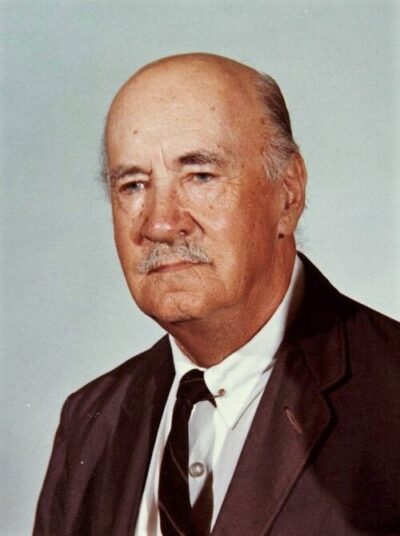
Igor Sikorsky
Igor Sikorsky was an American aviation pioneer from Russian Empire. Born May 25, 1889, in Kyiv. Died October 26, 1972, in Easton. Educated at Kyiv Polytechnic Institute of Emperor Alexander II and Igor Sikorsky Kyiv Polytechnic Institute. Awards include Daniel Guggenheim Medal, John Fritz Medal and ASME Medal.
Facts
41 facts · 2 confirmed by two sources · 14 cited · 25 from one source
Where this comes from
Papalocal keeps its own record. It started from these sources; what each one said is kept here as it was copied, so a change on their side never changes this page by itself. Tap one to read its version.
What Wikidata says · copied November 13, 2026 · revision 2559561653
- Described as
- American aviation pioneer from Russian Empire (1889–1972)
- Other names
- Igor Ivanovich Sikorsky
- Born
- May 25, 1889
- Died
- October 26, 1972 · 9 references
- Born in
- Kyiv · 2 references
- Died in
- Easton
- Buried in
- Saint John the Baptist Orthodox Cemetery · 1 reference
- Citizen of
- Russian Empire; United States; Ukrainian People's Republic
- Occupation
- military flight engineer; inventor; aircraft pilot · 1 reference; entrepreneur · 1 reference
- Worked for
- University of Rhode Island; University of Bridgeport · 1 reference; Sikorsky Aircraft Corporation
- Education
- Kyiv Polytechnic Institute of Emperor Alexander II (–1911); Igor Sikorsky Kyiv Polytechnic Institute; Naval Cadet Corps; Kiev Gymnasium
- Member of
- National Academy of Engineering · 1 reference
- Awards
- Daniel Guggenheim Medal (1951) · 1 reference; John Fritz Medal (1968) · 1 reference; ASME Medal (1963) · 1 reference; Howard N. Potts Medal (1933) · 1 reference; National Medal of Science (1967); Order of St. Vladimir, 4th class; National Aviation Hall of Fame (1968) · 1 reference; National Inventors Hall of Fame (1987) · 1 reference; FAI Gold Air Medal (1946); John Scott Award (1954) · 1 reference; James Watt International Medal (1955) · 1 reference; Edward Warner Award (1990) · 1 reference; Worcester Reed Warner Medal (1943) · 1 reference; Order of St. Vladimir · 1 reference
- Field
- aerospace engineering; design engineering; military flight engineer · 1 reference; aircraft designer · 1 reference
- Children
- Sergei Sikorsky · 1 reference
- Father
- Ivan Sikorski
- Religion
- Russian Orthodox Church · 1 reference
- Wikipedias with a page
- 66
Wikidata item Q212446 (wikidata.org/wiki/Q212446), public domain (CC0). Copied November 13, 2026.
What Wikipedia says · copied November 13, 2026 · revision 1371316298
Igor Ivanovich Sikorsky (25 May 1889 – 26 October 1972) was a Russian-American aviation pioneer in both helicopters and fixed-wing aircraft. His first success came with the Sikorsky S-2, the second aircraft of his design and construction. His fifth airplane, the S-5, won him national recognition in Russia and secured F.A.I. pilot's license number 64. His S-6-A received the highest award at the 1912 Moscow Aviation Exhibition, and in the fall of that year the aircraft won first prize for its young designer, builder and pilot in the military competition at Saint Petersburg. In 1913, the Sikorsky-designed Russky Vityaz (S-21) became the first successful four-engine aircraft to take flight. He also designed and built the Ilya Muromets (S-22 – S-27) family of four-engine aircraft, an airliner which he redesigned to be the world's first four-engine bomber when World War I broke out.
After emigrating to the United States in 1919 because of the Russian Revolution, Sikorsky founded the Sikorsky Aircraft Corporation in 1923 and developed the first of Pan American Airways' ocean-crossing flying boats in the 1930s, including the Sikorsky S-42 "Flying Clipper".
In 1939, Sikorsky designed and flew the Vought-Sikorsky VS-300, the first viable American helicopter, which pioneered the single main rotor and a single antitorque tail rotor configuration used by most helicopters today. Sikorsky modified the design into the Sikorsky R-4, which became the world's first mass-produced helicopter in 1942.
- Born, in its opening lines
- May 25, 1889
- Died, in its opening lines
- October 26, 1972
From the Wikipedia article “Igor Sikorsky” (en.wikipedia.org/wiki/Igor_Sikorsky), by its contributors, under CC BY-SA 4.0 (creativecommons.org/licenses/by-sa/4.0/). Copied November 13, 2026; not changed.
Confirmed Two sources agree. Cited One source, and it names where it got it. One source One source, without a reference of its own. Sources disagree The sources disagree. We show the best-supported value and keep theirs below.
