
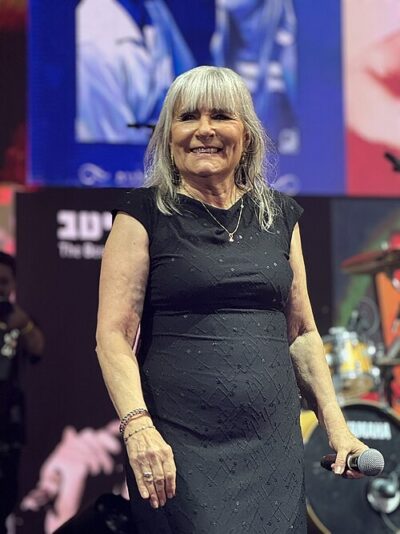
Ilanit is an Israeli singer. Born September 17, 1947, in Tel Aviv. Educated at Thelma Yellin High School of the Arts.
Facts
14 facts · 1 confirmed by two sources · 1 cited · 12 from one source
Where this comes from
Papalocal keeps its own record. It started from these sources; what each one said is kept here as it was copied, so a change on their side never changes this page by itself. Tap one to read its version.
What Wikidata says · copied November 18, 2026 · revision 2565732514
- Described as
- Israeli singer
- Other names
- Hanna Drezner-Tzakh
- Born
- September 17, 1947
- Born in
- Tel Aviv
- Name at birth
- חנה דרזנר
- Citizen of
- Israel
- Occupation
- singer · 1 reference
- Education
- Thelma Yellin High School of the Arts
- Member of
- Ilan and Ilanit
- Genre
- pop music; Israeli folk music
- Instrument
- voice
- Record label
- NMC; Hed Arzi Music
- Spouse
- Shlomo Zach
- Website
- https://ilanitsinger.co.il/
- Wikipedias with a page
- 24
Wikidata item Q274743 (wikidata.org/wiki/Q274743), public domain (CC0). Copied November 18, 2026.
What Wikipedia says · copied November 18, 2026 · revision 1379213582
Hanna Dresner-Tzakh (Hebrew: חנה דרזנר; born 17 September 1947), known by her stage name Ilanit (אילנית, Hebrew pronunciation: [ilaˈnit]), is an Israeli singer. She was one of Israel's most popular singers from the late 1960s to the 1980s, both as a soloist and in the duo Ilan & Ilanit. Ilanit also represented Israel twice in the Eurovision Song Contest, in 1973 with "Ey Sham" (Israel's debut entry in the competition) and in 1977 with "Ahava Hi Shir Lishnayim". In a career spanning over four decades, Ilanit has recorded and produced over 600 songs and more than 30 albums.
- Born, in its opening lines
- September 17, 1947
From the Wikipedia article “Ilanit” (en.wikipedia.org/wiki/Ilanit), by its contributors, under CC BY-SA 4.0 (creativecommons.org/licenses/by-sa/4.0/). Copied November 18, 2026; not changed.
Confirmed Two sources agree. Cited One source, and it names where it got it. One source One source, without a reference of its own. Sources disagree The sources disagree. We show the best-supported value and keep theirs below.
