
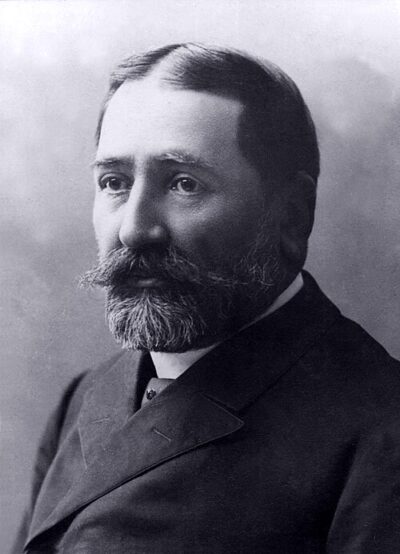
Ilia Chavchavadze
Ilia Chavchavadze was a Georgian public figure and writer; a saint of Georgian Orthodox Church. Born October 27, 1837, in Kvareli. Died August 30, 1907, in Tsitsamuri. Positions held include member of the State Council of the Russian Empire.
Facts
18 facts · 0 confirmed by two sources · 8 cited · 8 from one source · 2 where the sources disagree
What’s different
- Born: we show October 27, 1837 (Sources disagree). Wikipedia says November 8, 1837
- Died: we show August 30, 1907 (Sources disagree). Wikipedia says September 12, 1907
Where this comes from
Papalocal keeps its own record. It started from these sources; what each one said is kept here as it was copied, so a change on their side never changes this page by itself. Tap one to read its version.
What Wikidata says · copied November 16, 2026 · revision 2562931010
- Described as
- Georgian public figure and writer; a saint of Georgian Orthodox Church (1837-1907)
- Other names
- Prince Ilia Chavchavadze, Saint Ilia the Righteous, Čavčavaże, Ilia, tʻavadi, 1837-1907, Chavchavadze, I., 1837-1907, Chavchavadze, Ilya, 1837-1907, Čavčavaże, I. (Ilia), 1837-1907, Ilia, Cmida, Martʻali, 1837-1907, Chavchavadze, Ilʹi︠a︡ Grigorʹevich, kni︠a︡zʹ, 1837-1907
- Born
- October 27, 1837 · 2 references
- Died
- August 30, 1907 · 2 references
- Born in
- Kvareli · 2 references
- Died in
- Tsitsamuri · 1 reference
- Buried in
- Mtatsminda Pantheon
- Citizen of
- Georgia · 1 reference
- Occupation
- politician · 1 reference; poet · 1 reference; publisher; philosopher; writer · 2 references; historian; opinion journalist · 2 references
- Positions held
- member of the State Council of the Russian Empire
- Field
- creative and professional writing · 1 reference; opinion journalism · 1 reference
- Spouse
- Olga Chavchavadze
- Lived in
- Tbilisi
- Wikipedias with a page
- 66
Wikidata item Q333411 (wikidata.org/wiki/Q333411), public domain (CC0). Copied November 16, 2026.
What Wikipedia says · copied November 16, 2026 · revision 1380078638
Tavadi (Prince) Ilia Chavchavadze (Georgian: ილია ჭავჭავაძე; 8 November [O.S. 27 October] 1837 – 12 September 1907) was a Georgian journalist, publisher, writer and poet who spearheaded the revival of Georgian nationalism during the second half of the 19th century in the period of Tsarist rule. To this day, he has been called Georgia's "most universally revered hero" and the "Father of the Nation" of the modern Georgia.
He was a leader of contemporary youth intellectual movement named "Tergdaleulebi" which spread modern and European liberal ideals in Georgia. Chavchavadze founded two modern newspapers: Sakartvelos Moambe and Iveria.
He coined the phrase "Ena, Mamuli, Sartsmunoeba" ("Language, Homeland, Faith"), a slogan of Georgian nationalism.
After the 1905 Russian Revolution Chavchavadze's developed a keen interest in the national liberation movement for which he was elected as a representative of the Georgian nobility to the imperial State Council.
Chavchavadze was an outspoken critic of the Bolsheviks and considered the most influential Georgian writer in his day. Because of his great popularity he drew many people among the peasant class away from the idea of radical socialism, which is why many suspect was the reason for his assassination.
Chavchavadze was killed in Tsitsamuri, near Mtskheta, by a gang of assassins in 1907. It was generally believed that the Bolsheviks and the social Democrats were responsible for his death, but they were able to divert some suspicion against the Tsarist secret police. Local sources were scrutinized, leaving little doubt that the Bolshevicks were responsible for Chavchavadze's brutal death. Later, he was canonized as Saint Ilia the Righteous (წმინდა ილია მართალი, tsminda ilia martali) by the Georgian Orthodox Church.
- Born, in its opening lines
- November 8, 1837
- Died, in its opening lines
- September 12, 1907
From the Wikipedia article “Ilia Chavchavadze” (en.wikipedia.org/wiki/Ilia_Chavchavadze), by its contributors, under CC BY-SA 4.0 (creativecommons.org/licenses/by-sa/4.0/). Copied November 16, 2026; not changed.
Confirmed Two sources agree. Cited One source, and it names where it got it. One source One source, without a reference of its own. Sources disagree The sources disagree. We show the best-supported value and keep theirs below.
