
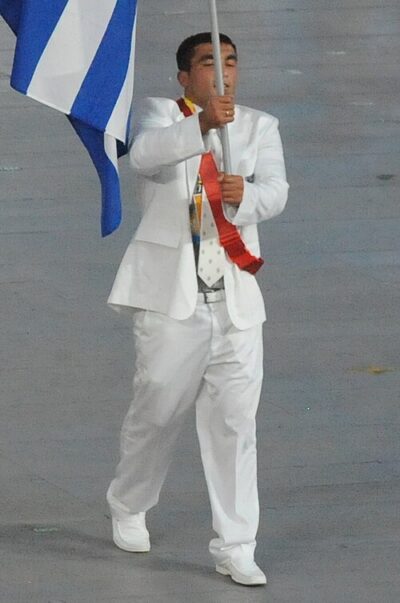
Ilias Iliadis is a Greek judoka. Born November 10, 1986, in Akhmeta.
Facts
6 facts · 1 confirmed by two sources · 1 cited · 4 from one source
Where this comes from
Papalocal keeps its own record. It started from these sources; what each one said is kept here as it was copied, so a change on their side never changes this page by itself. Tap one to read its version.
What Wikidata says · copied November 16, 2026 · revision 2554022936
- Described as
- Greek judoka
- Born
- November 10, 1986 · 1 reference
- Born in
- Akhmeta
- Citizen of
- Greece
- Occupation
- judoka
- Sport
- judo · 1 reference
- Height
- 1.78 m (5 ft 10 in)
- Wikipedias with a page
- 31
Wikidata item Q379543 (wikidata.org/wiki/Q379543), public domain (CC0). Copied November 16, 2026.
What Wikipedia says · copied November 16, 2026 · revision 1373849642
Ilias Iliadis (Greek: Ηλίας Ηλιάδης, born Jarji Zviadauri, Georgian: ჯარჯი ზვიადაური, on 10 November 1986) is a Georgian-born Greek judoka. He was named the 2014 Greek Male Athlete of the Year.
He won a gold medal in the half-middleweight (81 kg) division at the 2004 Summer Olympics in Athens at age 17. Illiadis also won a gold medal 6 years later at the 2010 World Judo Championships in Tokyo in the −90 kg category.
As Greece's flagbearer, he had the honour of being the first athlete to march into the Bird's Nest Stadium during the opening ceremony of the 2008 Summer Olympics in Beijing.
Iliadis is a cousin of another Olympic champion, Georgian judoka Zurab Zviadauri, who also won gold at the 2004 Summer Olympics. Iliadis's family moved to Greece in 2003. He was adopted by Nikos Iliadis.
Since November 2019 Iliadis works as head coach for the Uzbek national team.
- Born, in its opening lines
- November 10, 1986
From the Wikipedia article “Ilias Iliadis (judoka)” (en.wikipedia.org/wiki/Ilias_Iliadis_(judoka)), by its contributors, under CC BY-SA 4.0 (creativecommons.org/licenses/by-sa/4.0/). Copied November 16, 2026; not changed.
Confirmed Two sources agree. Cited One source, and it names where it got it. One source One source, without a reference of its own. Sources disagree The sources disagree. We show the best-supported value and keep theirs below.
