
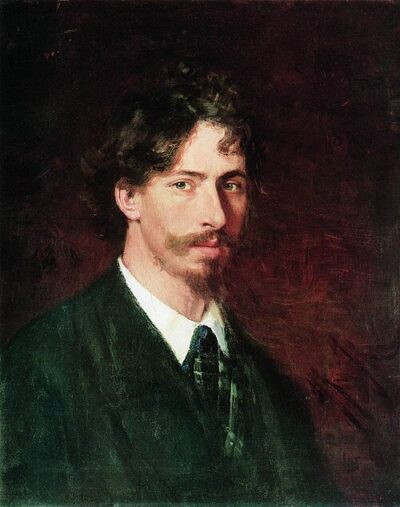
Ilya Repin
Ilya Repin was a Russian-empire painter of Ukrainian birth. Born July 24, 1844, in Chuhuiv. Died September 29, 1930, in Repino. Known for Barge Haulers on the Volga, Religious Procession in Kursk Province and Reply of the Zaporozhian Cossacks. Educated at Imperial Academy of Arts. Awards include Knight of the Legion of Honour, Large gold medal of the Imperial Academy of Arts and Commander of the Order of the White Rose of Finland.
Facts
37 facts · 1 confirmed by two sources · 9 cited · 26 from one source · 1 where the sources disagree
What’s different
- Born: we show July 24, 1844 (Sources disagree). Wikipedia says August 5, 1844
Where this comes from
Papalocal keeps its own record. It started from these sources; what each one said is kept here as it was copied, so a change on their side never changes this page by itself. Tap one to read its version.
What Wikidata says · copied November 16, 2026 · revision 2565110580
- Described as
- Russian-empire painter of Ukrainian birth (1844-1930)
- Other names
- Ilja Jefimovitš Repin, Ilia Efimovich Repin, Ilja Jefimovitsj Repin, Ilja Jefimovič Rjepin, Il'︠i︡a Efimovich Repin, Il'ya Yefimovich Repin, I. I︠A︡. Rėpin, Il'ya Repin, Elias Repin, Ilya Efimovich Repin, Ilia E. Repin, Ilʹi︠a︡ Efimovich Ri︠e︡pin
- Born
- July 24, 1844 · 3 references
- Died
- September 29, 1930 · 6 references
- Born in
- Chuhuiv · 3 references
- Died in
- Repino · 2 references
- Buried in
- Penaty estate
- Citizen of
- Russian Empire · 1 reference; statelessness (1917–)
- Occupation
- painter · 3 references; sculptor · 1 reference; essayist; graphic artist · 1 reference; teacher · 1 reference
- Worked for
- Higher Art School at the Imperial Academy of Arts
- Education
- Imperial Academy of Arts (1863–1871) · 1 reference
- Member of
- Serbian Academy of Sciences and Arts (1907–1930)
- Genre
- history painting; portrait; genre painting
- Known for
- Barge Haulers on the Volga; Religious Procession in Kursk Province; Reply of the Zaporozhian Cossacks; Ceremonial Sitting of the State Council on 7 May 1901 Marking the Centenary of its Foundation
- Awards
- Knight of the Legion of Honour; Large gold medal of the Imperial Academy of Arts · 1 reference; Commander of the Order of the White Rose of Finland (1920) · 1 reference
- Field
- painting · 1 reference; realism · 1 reference
- Spouse
- Vera Alekseyevna Repina; Natalia Nordman
- Children
- Yuri Repin
- Mother
- Tatiana Repina
- Lived in
- Chuhuiv (1844–); Repino (1900–1930); Paris; Saint Petersburg; Moscow
- Website
- http://ilya-repin.ru/ · 1 reference
- Wikipedias with a page
- 91
Wikidata item Q172911 (wikidata.org/wiki/Q172911), public domain (CC0). Copied November 16, 2026.
What Wikipedia says · copied November 16, 2026 · revision 1383223934
Ilya Yefimovich Repin (5 August [O.S. 24 July] 1844 – 29 September 1930) was a Ukrainian-born Russian painter. He became one of the most renowned artists in Russia in the 19th century. His major works include Barge Haulers on the Volga (1873), Religious Procession in Kursk Province (1880–1883), Ivan the Terrible and His Son Ivan (1885), and Reply of the Zaporozhian Cossacks (1880–1891). Repin is also known for the revealing portraits he made of the leading Russian literary and artistic figures of his time, including Mikhail Glinka, Modest Mussorgsky, Pavel Tretyakov, and especially Leo Tolstoy, with whom he had a long friendship.
Repin was born and brought up in Chuguev, then part of Russia. His father had served in an Uhlan regiment in the Russian army and then sold horses. Repin began painting icons at age sixteen. He failed at his first effort to enter the Imperial Academy of Arts in Saint Petersburg but went to the city anyway in 1863, audited courses, and won his first prizes in 1869 and 1871. In 1872, he presented his drawings at the academy after a tour along the Volga River. Grand Duke Vladimir Alexandrovich awarded him a commission for a large scale painting, The Barge Haulers of the Volga, which launched his career. Repin spent two years in Paris and Normandy, seeing the first Impressionist expositions and learning the techniques of painting in the open air.
Repin suffered one setback in 1885 when his history portrait of Ivan the Terrible killing his own son in a fit of rage caused a scandal, resulting in the painting being removed from exhibition. But this was followed by a series of major successes and new commissions. In 1898, with his second wife, he built a country house, which he called "The Penates" ('Penaty' in Russian) in Kuokkala, Viipuri Province, Finland, where they entertained Russian society. The house and garden now constitute the Penaty Memorial Estate, a museum and UNESCO World Heritage Site.
In 1905, following the repression of street demonstrations by the Imperial government, Repin quit his teaching position at the Academy of Arts. He welcomed the February Revolution in 1917 and had fluctuating opinions on the October Revolution. Later that year, Finland declared its independence from Russia. Following this event, he was unable to travel to Saint Petersburg (renamed Leningrad), even for an exhibition of his own works in 1925. Repin died in 1930 at the age of 86 and was buried at the Penates.
- Born, in its opening lines
- August 5, 1844
- Died, in its opening lines
- September 29, 1930
From the Wikipedia article “Ilya Repin” (en.wikipedia.org/wiki/Ilya_Repin), by its contributors, under CC BY-SA 4.0 (creativecommons.org/licenses/by-sa/4.0/). Copied November 16, 2026; not changed.
Confirmed Two sources agree. Cited One source, and it names where it got it. One source One source, without a reference of its own. Sources disagree The sources disagree. We show the best-supported value and keep theirs below.
