
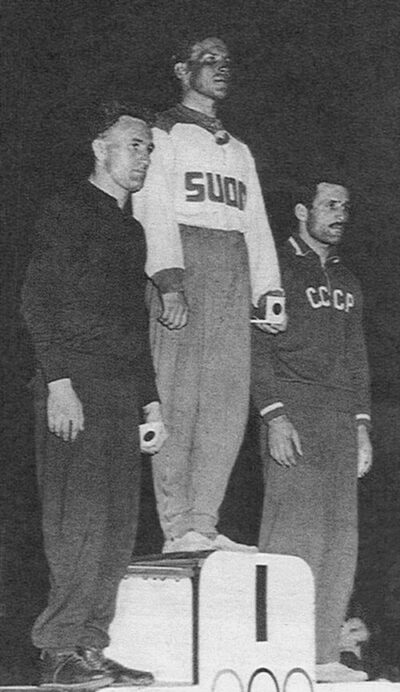
Imre Polyák
Imre Polyák was an Olympic wrestler. Born April 16, 1932, in Kecskemét. Died November 15, 2010, in Budapest.
Facts
11 facts · 2 confirmed by two sources · 1 cited · 8 from one source
Where this comes from
Papalocal keeps its own record. It started from these sources; what each one said is kept here as it was copied, so a change on their side never changes this page by itself. Tap one to read its version.
What Wikidata says · copied November 18, 2026 · revision 2559365125
- Described as
- Olympic wrestler (1932–2010)
- Other names
- Imre Polyak
- Born
- April 16, 1932 · 1 reference
- Died
- November 15, 2010 · 2 references
- Born in
- Kecskemét
- Died in
- Budapest
- Buried in
- St. Stephen's Basilica · 1 reference
- Citizen of
- Hungary
- Occupation
- amateur wrestler; coach; police officer
- Sport
- amateur wrestling
- Height
- 1.70 m (5 ft 7 in) · 1 reference
- Wikipedias with a page
- 20
Wikidata item Q724441 (wikidata.org/wiki/Q724441), public domain (CC0). Copied November 18, 2026.
What Wikipedia says · copied November 18, 2026 · revision 1364414305
Imre Polyák (16 April 1932 – 15 November 2010) was a featherweight Greco-Roman wrestler from Hungary. He competed in the 1952, 1956, 1960 and 1964 Olympics and won three silver and one gold medal. He won the world title in 1955, 1958 and 1962, and placed second in 1961 and 1963. Nationally Polyák won 12 Hungarian titles and was named Sportsman of the Year in 1958 and 1962.
Polyák was a policeman by profession. After retiring from competitions he worked as a coach in his native club Újpesti. In 2003 he was one of the first athletes to be inducted into the FILA International wrestling Hall of Fame.
- Born, in its opening lines
- April 16, 1932
- Died, in its opening lines
- November 15, 2010
From the Wikipedia article “Imre Polyák” (en.wikipedia.org/wiki/Imre_Polyák), by its contributors, under CC BY-SA 4.0 (creativecommons.org/licenses/by-sa/4.0/). Copied November 18, 2026; not changed.
Confirmed Two sources agree. Cited One source, and it names where it got it. One source One source, without a reference of its own. Sources disagree The sources disagree. We show the best-supported value and keep theirs below.
