
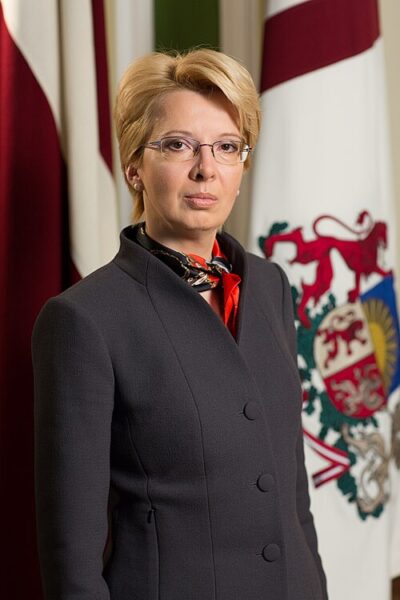
Ināra Mūrniece
Ināra Mūrniece is a Latvian politician and journalist. Born December 30, 1970, in Riga. Positions held include deputy of Saeima (2011–), Speaker of the Saeima (2014–2022) and Minister of Defence of Latvia (2022–2023). Educated at EKA University of Applied Sciences and University of Latvia. Awards include Order of Prince Yaroslav the Wise, 2nd class and Medal of the Baltic Assembly.
Facts
15 facts · 1 confirmed by two sources · 4 cited · 10 from one source
Where this comes from
Papalocal keeps its own record. It started from these sources; what each one said is kept here as it was copied, so a change on their side never changes this page by itself. Tap one to read its version.
What Wikidata says · copied November 18, 2026 · revision 2562813453
- Described as
- Latvian politician and journalist
- Born
- December 30, 1970
- Born in
- Riga · 1 reference
- Citizen of
- Soviet Union; Latvia
- Occupation
- politician; journalist
- Positions held
- deputy of Saeima (2011–) · 1 reference; Speaker of the Saeima (2014–2022) · 1 reference; Minister of Defence of Latvia (2022–2023) · 1 reference
- Political party
- National Alliance
- Education
- EKA University of Applied Sciences (–2007); University of Latvia (–2009)
- Awards
- Order of Prince Yaroslav the Wise, 2nd class · 1 reference; Medal of the Baltic Assembly
- Spouse
- Ritvars Jansons (1995–2015)
- Wikipedias with a page
- 24
Wikidata item Q4308133 (wikidata.org/wiki/Q4308133), public domain (CC0). Copied November 18, 2026.
What Wikipedia says · copied November 18, 2026 · revision 1386317466
Ināra Mūrniece (born 30 December 1970) is a Latvian journalist, politician and a member of Saeima. She was Speaker of the Saeima from 2014 to 2022. In 2022, she was succeeded in that role by Edvards Smiltēns.
- Born, in its opening lines
- December 30, 1970
From the Wikipedia article “Ināra Mūrniece” (en.wikipedia.org/wiki/Ināra_Mūrniece), by its contributors, under CC BY-SA 4.0 (creativecommons.org/licenses/by-sa/4.0/). Copied November 18, 2026; not changed.
Confirmed Two sources agree. Cited One source, and it names where it got it. One source One source, without a reference of its own. Sources disagree The sources disagree. We show the best-supported value and keep theirs below.
