
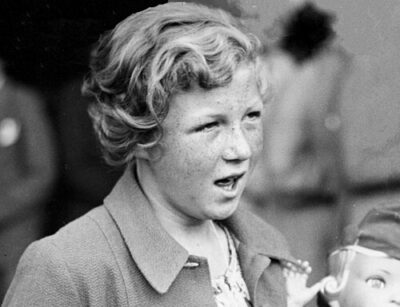
Inge Sørensen was a Danish swimmer. Born July 18, 1924, in Gentofte. Died March 9, 2011, in Mount Laurel.
Facts
7 facts · 2 confirmed by two sources · 0 cited · 5 from one source
Where this comes from
Papalocal keeps its own record. It started from these sources; what each one said is kept here as it was copied, so a change on their side never changes this page by itself. Tap one to read its version.
What Wikidata says · copied November 17, 2026 · revision 2570401999
- Described as
- Danish swimmer
- Born
- July 18, 1924 · 1 reference
- Died
- March 9, 2011 · 2 references
- Born in
- Gentofte
- Died in
- Mount Laurel · 1 reference
- Citizen of
- Kingdom of Denmark
- Occupation
- swimmer
- Sport
- competitive swimming
- Wikipedias with a page
- 25
Wikidata item Q260385 (wikidata.org/wiki/Q260385), public domain (CC0). Copied November 17, 2026.
What Wikipedia says · copied November 17, 2026 · revision 1375178851
Inge Sørensen (18 July 1924 – 9 March 2011), later Inge Tabur, sometimes known as "Lille henrivende Inge" ("Little endearing Inge") was a Danish swimmer who at age 12 won a bronze medal in the 200 meter breaststroke at the 1936 Summer Olympics in Berlin. This makes her the youngest Olympic medal winner in an individual competition.
During 1936-1944 she won nine Danish championships, two Nordic championships and one European championship. She set 14 Danish records in breaststroke. She also broke the world record in the 400m and 500m breaststroke and became the first Danish female swimmer to finish in under three minutes in the 200m breaststroke.
Her swimming career was cut short by World War II. After the war she married a Danish engineer and moved abroad, eventually residing in the US.
- Born, in its opening lines
- July 18, 1924
- Died, in its opening lines
- March 9, 2011
From the Wikipedia article “Inge Sørensen” (en.wikipedia.org/wiki/Inge_Sørensen), by its contributors, under CC BY-SA 4.0 (creativecommons.org/licenses/by-sa/4.0/). Copied November 17, 2026; not changed.
Confirmed Two sources agree. Cited One source, and it names where it got it. One source One source, without a reference of its own. Sources disagree The sources disagree. We show the best-supported value and keep theirs below.
