
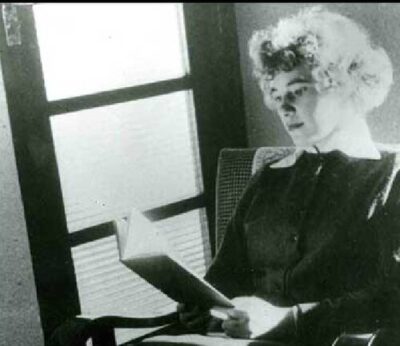
Ingrid Jonker
Ingrid Jonker was a Bilingual South African poet and political dissident. Born September 19, 1933, in Kimberley. Died July 19, 1965, in Three Anchor Bay. Educated at Wynberg Girls' High School. Awards include Order of Ikhamanga in Silver.
Facts
14 facts · 2 confirmed by two sources · 4 cited · 8 from one source
Where this comes from
Papalocal keeps its own record. It started from these sources; what each one said is kept here as it was copied, so a change on their side never changes this page by itself. Tap one to read its version.
What Wikidata says · copied November 18, 2026 · revision 2565764378
- Described as
- Bilingual South African poet and political dissident (1933–1965)
- Born
- September 19, 1933 · 7 references
- Died
- July 19, 1965 · 7 references
- Born in
- Kimberley · 1 reference
- Died in
- Three Anchor Bay
- Cause of death
- drowning
- Citizen of
- South Africa
- Occupation
- poet; writer · 1 reference; costume designer; librettist · 1 reference
- Education
- Wynberg Girls' High School
- Awards
- Order of Ikhamanga in Silver (2004) · 1 reference
- Field
- poetry
- Father
- Abraham Jonker
- Wikipedias with a page
- 24
Wikidata item Q455266 (wikidata.org/wiki/Q455266), public domain (CC0). Copied November 18, 2026.
What Wikipedia says · copied November 18, 2026 · revision 1382448559
Ingrid Jonker (19 September 1933 – 19 July 1965) was a South African poet and accomplished figure in modern Afrikaans literature. Her poems have been widely translated into other languages.
Born into an Afrikaner family with 400-year-old roots in South Africa, Jonker grew up in an unstable family. After the death of her mother, she and her sister Anna moved in with their until-then-estranged father, where they encountered significant emotional abuse from their stepmother before both moving out.
During the 1950s and 1960s, which saw the Sharpeville massacre, the increasingly draconian enforcement of Apartheid laws, and escalating terrorism committed both by Government security forces and by the paramilitary wing of the African National Congress, Jonker chose to affiliate herself with Cape Town's racially mixed literary bohemia, which gathered around her fellow Afrikaner poet and literary mentor Uys Krige in the beach-side suburb of Clifton. In both her poems and in newspaper interviews, Jonker denounced the ruling National Party's racial policies and the increasing censorship of literature and the media. This brought her into open conflict with her father, a widely respected Member of Parliament for the ruling Party. In 1965, Jonker's childhood trauma, recent failed marriage, and her disastrous relationships with several different men led to her major depression and finally suicide by drowning. Even so, Jonker has reached iconic status in post-Apartheid South Africa and is often compared with Sylvia Plath and Marilyn Monroe.
- Born, in its opening lines
- September 19, 1933
- Died, in its opening lines
- July 19, 1965
From the Wikipedia article “Ingrid Jonker” (en.wikipedia.org/wiki/Ingrid_Jonker), by its contributors, under CC BY-SA 4.0 (creativecommons.org/licenses/by-sa/4.0/). Copied November 18, 2026; not changed.
Confirmed Two sources agree. Cited One source, and it names where it got it. One source One source, without a reference of its own. Sources disagree The sources disagree. We show the best-supported value and keep theirs below.
