
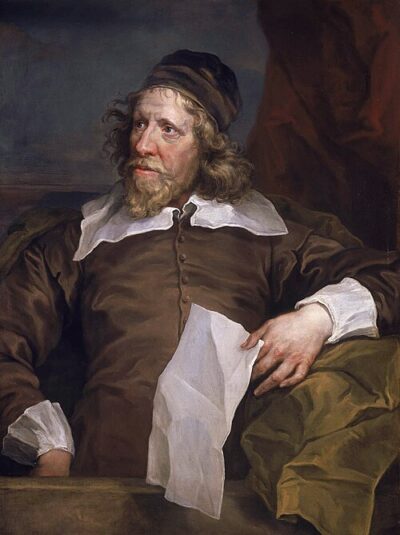
Inigo Jones
Inigo Jones was an English architect and stage designer. Born July 15, 1573, in Smithfield. Died June 21, 1652, in London. Positions held include Member of Parliament in the Parliament of England and Member of the 1621-22 Parliament. Known for St Paul's Church, Covent Garden and Queen's Chapel.
Facts
14 facts · 2 confirmed by two sources · 4 cited · 8 from one source
Where this comes from
Papalocal keeps its own record. It started from these sources; what each one said is kept here as it was copied, so a change on their side never changes this page by itself. Tap one to read its version.
What Wikidata says · copied November 16, 2026 · revision 2557932269
- Described as
- English architect and stage designer (1573-1652)
- Other names
- Inigo Iones, Enego Jones, Innigo Jones, Henygo Jones
- Born
- July 15, 1573 · 12 references
- Died
- June 21, 1652 · 16 references
- Born in
- Smithfield · 1 reference
- Died in
- London · 2 references
- Citizen of
- Kingdom of England
- Occupation
- architect · 3 references; politician; scenographer · 1 reference; theatre designer · 1 reference
- Positions held
- Member of Parliament in the Parliament of England; Member of the 1621-22 Parliament
- Known for
- St Paul's Church, Covent Garden; Queen's Chapel
- Field
- architecture
- Wikipedias with a page
- 55
Wikidata item Q295929 (wikidata.org/wiki/Q295929), public domain (CC0). Copied November 16, 2026.
What Wikipedia says · copied November 16, 2026 · revision 1384868310
Inigo Jones (15 July 1573 – 21 June 1652) was an English architect who was the first significant architect in England in the early modern era and the first to employ Vitruvian rules of proportion and symmetry in his buildings.
As the most notable architect in England, Jones was the first person to introduce the classical architecture of Rome and the Italian Renaissance to England. He left his mark on London by his design of single buildings, such as the Queen's House which is the first building in England designed in a pure classical style, and the Banqueting House, Whitehall, as well as the layout for Covent Garden square which became a model for future developments in the West End. He made major contributions to stage design by his work as a theatrical designer for several dozen masques, most by royal command and many in collaboration with Ben Jonson.
- Born, in its opening lines
- July 15, 1573
- Died, in its opening lines
- June 21, 1652
From the Wikipedia article “Inigo Jones” (en.wikipedia.org/wiki/Inigo_Jones), by its contributors, under CC BY-SA 4.0 (creativecommons.org/licenses/by-sa/4.0/). Copied November 16, 2026; not changed.
Confirmed Two sources agree. Cited One source, and it names where it got it. One source One source, without a reference of its own. Sources disagree The sources disagree. We show the best-supported value and keep theirs below.
