
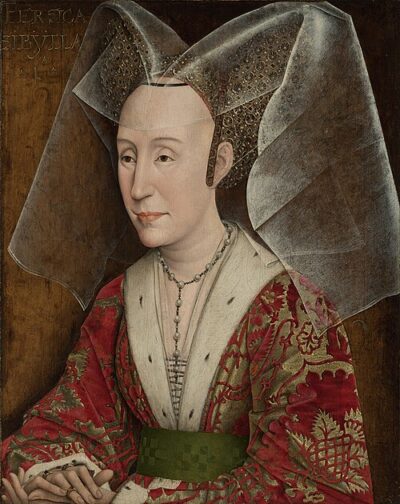
Isabella of Portugal was a Queen of Castile. Born 1428, in Kingdom of Portugal. Died August 15, 1496, in Arévalo.
Facts
15 facts · 2 confirmed by two sources · 3 cited · 10 from one source
Where this comes from
Papalocal keeps its own record. It started from these sources; what each one said is kept here as it was copied, so a change on their side never changes this page by itself. Tap one to read its version.
What Wikidata says · copied November 16, 2026 · revision 2565489029
- Described as
- Queen of Castile
- Born
- 1428
- Died
- August 15, 1496
- Born in
- Kingdom of Portugal · 1 reference
- Died in
- Arévalo
- Buried in
- Miraflores Charterhouse
- Citizen of
- Kingdom of Portugal
- Occupation
- royal consort of Castile
- Spouse
- John II of Castile (1447–1454) · 2 references
- Children
- Isabella I of Castile · 1 reference; Alfonso
- Father
- John, Constable of Portugal · 1 reference
- Mother
- Isabella of Braganza, Lady of Reguengos de Monsaraz
- Siblings
- Diogo, Constable of Portugal; Infanta Beatrice, Duchess of Viseu
- Religion
- Catholicism
- Wikipedias with a page
- 37
Wikidata item Q470403 (wikidata.org/wiki/Q470403), public domain (CC0). Copied November 16, 2026.
What Wikipedia says · copied November 16, 2026 · revision 1380229694
Isabella of Portugal (Isabel in Portuguese and Spanish) (1428 – 15 August 1496) was Queen of Castile and León between 1447 and 1454 as the second wife of King John II.
A granddaughter of John I of Portugal and Philippa of Lancaster, Isabella married John at age 19. They had two children that survived infancy: Isabella, who became Isabella I of Castile, and Alfonso, who died young.
- Born, in its opening lines
- 1428
- Died, in its opening lines
- August 15, 1496
From the Wikipedia article “Isabella of Portugal, Queen of Castile” (en.wikipedia.org/wiki/Isabella_of_Portugal,_Queen_of_Castile), by its contributors, under CC BY-SA 4.0 (creativecommons.org/licenses/by-sa/4.0/). Copied November 16, 2026; not changed.
Confirmed Two sources agree. Cited One source, and it names where it got it. One source One source, without a reference of its own. Sources disagree The sources disagree. We show the best-supported value and keep theirs below.
