
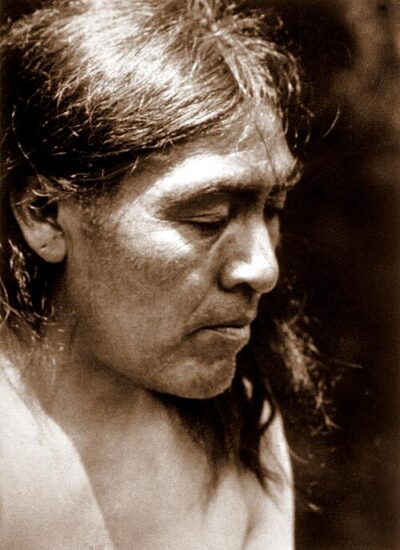
Ishi was a last of Yahi people. Born 1860, in Northern California. Died March 25, 1916, in University of California, Berkeley. Awards include California Hall of Fame.
Facts
8 facts · 1 confirmed by two sources · 3 cited · 3 from one source · 1 where the sources disagree
What’s different
- Born: we show 1860 (Sources disagree). Wikipedia says c. 1861
Where this comes from
Papalocal keeps its own record. It started from these sources; what each one said is kept here as it was copied, so a change on their side never changes this page by itself. Tap one to read its version.
What Wikidata says · copied November 15, 2026 · revision 2558833714
- Described as
- last of Yahi people (1860–1916)
- Born
- 1860 · 2 references
- Died
- March 25, 1916 · 4 references
- Born in
- Northern California
- Died in
- University of California, Berkeley
- Cause of death
- tuberculosis · 1 reference
- Citizen of
- United States
- Occupation
- hunter-gatherer · 2 references
- Awards
- California Hall of Fame (2013) · 1 reference
- Wikipedias with a page
- 28
Wikidata item Q982102 (wikidata.org/wiki/Q982102), public domain (CC0). Copied November 15, 2026.
What Wikipedia says · copied November 15, 2026 · revision 1383187469
Ishi (c. 1861 – March 25, 1916) was the last known member of the Native American Yahi people from the present-day state of California in the United States. The rest of the Yahi (as well as many members of their parent tribe, the Yana) were killed in the California genocide in the 19th century. Widely described as the "last wild Indian" in the United States, Ishi lived most of his life isolated from modern North American culture, and was the last known Native manufacturer of stone arrowheads. In 1911, aged 50, he emerged at a barn and corral, 2 mi (3.2 km) from downtown Oroville, California.
Ishi, which means "man" in the Yana language, is an adopted name. The anthropologist Alfred Kroeber gave him this name because in the Yahi culture, tradition demanded that he not speak his own name until formally introduced by another Yahi. When asked his name, he said: "I have none, because there were no people to name me", meaning that there was no other Yahi to speak his name on his behalf.
Anthropologists at the University of California, Berkeley, took Ishi in, studied him, and hired him as a janitor. He lived most of his remaining five years in a university building in San Francisco. His life was depicted and discussed in multiple films and books, notably the biographical account Ishi in Two Worlds published by Theodora Kroeber in 1961.
- Born, in its opening lines
- c. 1861
- Died, in its opening lines
- March 25, 1916
From the Wikipedia article “Ishi” (en.wikipedia.org/wiki/Ishi), by its contributors, under CC BY-SA 4.0 (creativecommons.org/licenses/by-sa/4.0/). Copied November 15, 2026; not changed.
Confirmed Two sources agree. Cited One source, and it names where it got it. One source One source, without a reference of its own. Sources disagree The sources disagree. We show the best-supported value and keep theirs below.
