
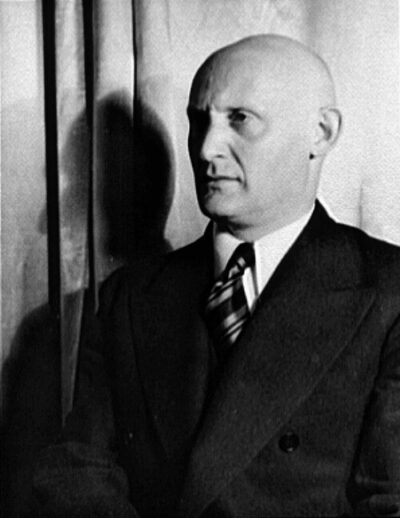
Israel Joshua Singer
Israel Joshua Singer was a Polish American Yiddish novelist and translator. Born November 30, 1893, in Biłgoraj. Died February 10, 1944, in New York City. Known for The Brothers Ashkenazi, The Family Karnowsky and Of a World That Is No More.
Facts
16 facts · 2 confirmed by two sources · 4 cited · 10 from one source
Where this comes from
Papalocal keeps its own record. It started from these sources; what each one said is kept here as it was copied, so a change on their side never changes this page by itself. Tap one to read its version.
What Wikidata says · copied November 16, 2026 · revision 2557935895
- Described as
- Polish American Yiddish novelist and translator (1893-1944)
- Born
- November 30, 1893 · 8 references
- Died
- February 10, 1944 · 8 references
- Born in
- Biłgoraj · 3 references
- Died in
- New York City · 4 references
- Cause of death
- myocardial infarction
- Citizen of
- United States; Poland · 1 reference
- Occupation
- writer; novelist; translator
- Known for
- The Brothers Ashkenazi; The Family Karnowsky; Of a World That Is No More
- Children
- Joseph Singer
- Siblings
- Isaac Bashevis Singer · 1 reference; Esther Kreitman
- Wikipedias with a page
- 23
Wikidata item Q557691 (wikidata.org/wiki/Q557691), public domain (CC0). Copied November 16, 2026.
What Wikipedia says · copied November 16, 2026 · revision 1383523523
Israel Joshua Singer (Yiddish: ישראל יהושע זינגער; November 30, 1893, Biłgoraj, Lubelskie, Congress Poland — February 10, 1944, Manhattan, New York) was a Polish-Jewish novelist who continued to write in Yiddish after he emigrated in 1934 to the United States with his wife and children. They settled in New York where he also worked for The Forward.
- Born, in its opening lines
- November 30, 1893
- Died, in its opening lines
- February 10, 1944
From the Wikipedia article “Israel Joshua Singer” (en.wikipedia.org/wiki/Israel_Joshua_Singer), by its contributors, under CC BY-SA 4.0 (creativecommons.org/licenses/by-sa/4.0/). Copied November 16, 2026; not changed.
Confirmed Two sources agree. Cited One source, and it names where it got it. One source One source, without a reference of its own. Sources disagree The sources disagree. We show the best-supported value and keep theirs below.
