
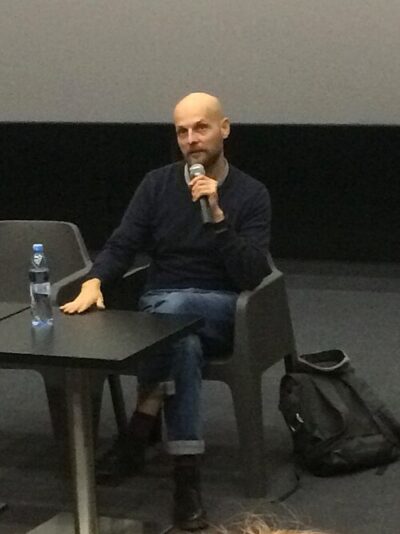
Ivan Vyrypaev
Ivan Vyrypaev is a Russian playwright, actor, film and theatre director. Born August 3, 1974, in Irkutsk. Educated at Irkutsk drama school and Boris Shchukin Theatre Institute. Awards include Nika Award, Kinotavr and Venice Film Festival.
Facts
30 facts · 1 confirmed by two sources · 10 cited · 19 from one source
Where this comes from
Papalocal keeps its own record. It started from these sources; what each one said is kept here as it was copied, so a change on their side never changes this page by itself. Tap one to read its version.
What Wikidata says · copied November 18, 2026 · revision 2557939192
- Described as
- Russian playwright, actor, film and theatre director
- Other names
- Ivan Aleksandrovich Vyrypayev, Ivan Aleksandrovich Vyrypaev
- Born
- August 3, 1974 · 2 references
- Born in
- Irkutsk · 2 references
- Citizen of
- Russia (–2022); Poland; Soviet Union (–1991)
- Occupation
- actor · 1 reference; screenwriter · 1 reference; playwright · 1 reference; film director; theatre director; director · 2 references
- Worked for
- Drama and Comedy Theatre of Petropavlovsk-Kamtchatsky (1996–1998); Irkutsk drama school (1999–2001); Praktika Theatre (2006); Russian Institute of Theatre Arts; Moscow Art Theatre School
- Education
- Irkutsk drama school (–1995); Boris Shchukin Theatre Institute (1998–)
- Awards
- Nika Award; Kinotavr; Venice Film Festival; Paszport Polityki
- Field
- drama · 1 reference; theatre · 1 reference; acting · 1 reference; film · 1 reference; film direction · 1 reference
- Spouse
- Polina Agureyeva (2003–2007); Karolina Gruszka; Svetlana Ivanova-Sergeyeva · 1 reference
- Wikipedias with a page
- 22
Wikidata item Q3156207 (wikidata.org/wiki/Q3156207), public domain (CC0). Copied November 18, 2026.
What Wikipedia says · copied November 18, 2026 · revision 1372701116
Ivan Aleksandrovich Vyrypaev (Russian: Ива́н Алекса́ндрович Вырыпа́ев; Polish: Iwan Wyrypajew; born August 3, 1974) is a Polish playwright of Russian descent, screenwriter, film director, actor and art director. He is a leading figure in the New Drama movement. Founder and general producer of the private Polish foundation WEDA PROJECT. Artistic Director and General Producer of the foundation for creative and spiritual development "Teal House" in Warsaw. Winner of numerous literary, theatrical and film awards, including the Venice Film Festival, Stuckemarkt International Contemporary Drama Festival, Warsaw Film Festival, Rome Film Festival and many others.
Ivan Vyrypayev's plays have been staged all over the world, from South Korea to the USA in more than 250 theaters. As a director, Vyrypayev has staged plays in theaters across Europe and the United States.
In 2019 Vyrypaev entered the top 10 most prominent playwrights of the world. He is also known as a film director, his film Euphoria got into the main competition of the Venice Film Festival and received the award of the "youth jury" "small golden lion" for the best film.
Since 2014 he has been living and working permanently in Poland together with his wife, prominent Polish actress Karolina Gruszka. Vyrypaev is known for his uncompromising stance on non-collaboration with the Russian state formulated after the Russo-Ukrainian War, which he denounced in the strongest of terms; his decision to donate all proceedings from the staging of his theatrical work in Russia to Ukraine has led to a comprehensive ban and a criminal case. Ivan Vyrypayev was arrested in absentia and sentenced in absentia to 8 years in prison for spreading false information about the Russian army (Article 207.3 of the Russian Criminal Code).
On July 3, 2026, he was awarded an honorary doctorate and professorship by the University of the Peloponnese in Greece.
- Born, in its opening lines
- August 3, 1974
From the Wikipedia article “Ivan Vyrypaev” (en.wikipedia.org/wiki/Ivan_Vyrypaev), by its contributors, under CC BY-SA 4.0 (creativecommons.org/licenses/by-sa/4.0/). Copied November 18, 2026; not changed.
Confirmed Two sources agree. Cited One source, and it names where it got it. One source One source, without a reference of its own. Sources disagree The sources disagree. We show the best-supported value and keep theirs below.
