
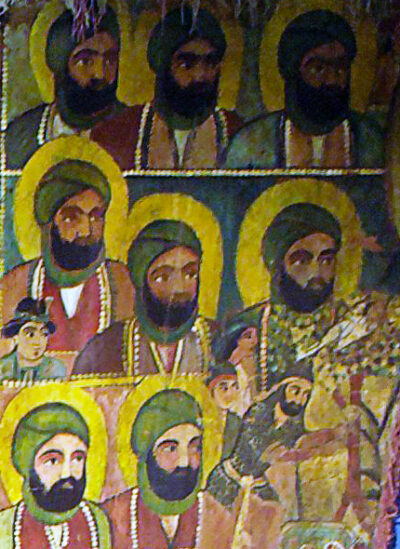
Jaafar Al-Sadiq
Jaafar Al-Sadiq was a Muslim scholar and Imam (died 765). Born April 20, 702, in Medina. Died December 16, 765, in Medina.
Facts
24 facts · 2 confirmed by two sources · 2 cited · 20 from one source
What’s different
- Born: we show April 20, 702 (Confirmed). Wikidata also lists 699
- Died: we show December 16, 765 (Confirmed). Wikidata also lists 765
Where this comes from
Papalocal keeps its own record. It started from these sources; what each one said is kept here as it was copied, so a change on their side never changes this page by itself. Tap one to read its version.
What Wikidata says · copied November 16, 2026 · revision 2564295310
- Described as
- Muslim scholar and Imam (died 765)
- Other names
- Imam Jaafar Al-Sadiq
- Born
- April 20, 702 · 1 reference; 699 · 1 reference
- Died
- December 16, 765; 765 · 1 reference
- Born in
- Medina
- Died in
- Medina
- Buried in
- Al-Baqi'
- Occupation
- imam; polymath
- Spouse
- Fatima Al-Hasan · 1 reference; Ḥamīda al-Barbariyya · 1 reference
- Children
- Musa al-Kazim · 1 reference; Isma'il ibn Jafar; Ali al-Uraidhi ibn Ja'far al-Sadiq; Abdullah al-Aftah; Muhammad ibn Ja'far al-Sadiq; Isḥâq ibn Ja'far al-Sadiq; Al-Abbas ibn Jafar; Fatima Bint Jafar; Umm Farwah Bint Jafar; Asmaa Bint Jafar
- Father
- Muhammad al-Baqir · 1 reference
- Mother
- Umm Farwa bint al-Qasim
- Siblings
- Sultan Ali; Amina bint Muhammed Al-Baqir
- Religion
- Islam
- Wikipedias with a page
- 78
Wikidata item Q170046 (wikidata.org/wiki/Q170046), public domain (CC0). Copied November 16, 2026.
What Wikipedia says · copied November 16, 2026 · revision 1383551960
Ja'far ibn Muhammad al-Sadiq (Arabic: جعفر ابن محمد الصادق, romanized: Jaʿfar ibn Muḥammad al-Ṣādiq; c. 702–765) was a Muslim scholar, jurist, hadith transmitter and the sixth and last agreed-upon Shia Imam amongst Twelvers and Isma'ilis. Known by the title al-Sadiq ("The Truthful"), Ja'far was the eponymous founder of the Ja'fari school of Islamic jurisprudence. In the canonical Twelver hadith collections, more traditions are cited from Ja'far than that of the other Imams combined, although their attribution to him is questionable, making it hard to determine his actual teachings. Among the theological contributions ascribed to him are the doctrine of nass (divinely inspired designation of each Imam by the previous Imam) and isma (the infallibility of the Imams), as well as that of taqiya (religious dissimulation under persecution).
Al-Sadiq is also revered by Sunni Muslims as a reliable transmitter of hadith, and a transmitter to the Sunni scholars Abu Hanifa and Malik ibn Anas, the namesakes of the Hanafi and Maliki schools of jurisprudence. Al-Sadiq also figures prominently in the initiatic chains of many Sufi orders. A wide range of religious and scientific works were attributed to him, though no works penned by al-Sadiq remain extant.
Ja'far al-Sadiq was born around 700, perhaps in 702. He was about thirty-seven when his father, Muhammad al-Baqir, died after designating him as the next Imam. As the sixth Shia Imam, al-Sadiq kept aloof from the political conflicts that embroiled the region, evading the requests for support that he received from rebels. He was the victim of some harassment by the Abbasid caliphs and was eventually, according to Shia sources, poisoned at the instigation of the caliph al-Mansur. The question of succession after al-Sadiq's death divided the early Shi'a community. Some considered the next Imam to be his eldest son, Isma'il al-Mubarak, who had predeceased his father. Others accepted the Imamate of his younger son and brother of Isma'il, Musa al-Kazim. The first group became known as the Isma'ili, whereas the second and larger group was named Ja'fari or the Twelvers.
- Born, in its opening lines
- 702
- Died, in its opening lines
- 765
From the Wikipedia article “Ja'far al-Sadiq” (en.wikipedia.org/wiki/Ja'far_al-Sadiq), by its contributors, under CC BY-SA 4.0 (creativecommons.org/licenses/by-sa/4.0/). Copied November 16, 2026; not changed.
Confirmed Two sources agree. Cited One source, and it names where it got it. One source One source, without a reference of its own. Sources disagree The sources disagree. We show the best-supported value and keep theirs below.
