
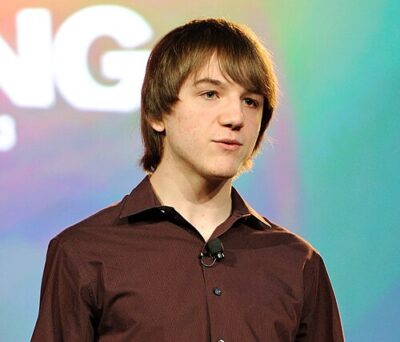
Jack Andraka
Jack Andraka is an American scientist, inventor and cancer researcher. Born January 8, 1997, in Crownsville. Educated at Stanford University and North County High School.
Facts
11 facts · 1 confirmed by two sources · 0 cited · 10 from one source
Where this comes from
Papalocal keeps its own record. It started from these sources; what each one said is kept here as it was copied, so a change on their side never changes this page by itself. Tap one to read its version.
What Wikidata says · copied November 16, 2026 · revision 2512984644
- Described as
- American scientist, inventor and cancer researcher
- Other names
- Jack Thomas Andraka
- Born
- January 8, 1997
- Born in
- Crownsville
- Citizen of
- United States
- Occupation
- inventor · 1 reference; cancer researcher
- Education
- Stanford University; North County High School · 1 reference
- Field
- cancer research; medical research; invention
- Website
- http://www.jackandraka.com/
- Wikipedias with a page
- 24
Wikidata item Q2626989 (wikidata.org/wiki/Q2626989), public domain (CC0). Copied November 16, 2026.
What Wikipedia says · copied November 16, 2026 · revision 1385772846
Jack Thomas Andraka (born January 8, 1997) is an American who achieved fame in 2012 for having won the Gordon E. Moore Award at the Intel International Science and Engineering Fair that year as a high school student, with a method to possibly detect the early stages of pancreatic and other cancers, the originality and viability of which was subsequently questioned. In 2018, as a junior majoring in anthropology and in electrical engineering at Stanford University, he was awarded the Truman Scholarship for his graduate studies.
- Born, in its opening lines
- January 8, 1997
From the Wikipedia article “Jack Andraka” (en.wikipedia.org/wiki/Jack_Andraka), by its contributors, under CC BY-SA 4.0 (creativecommons.org/licenses/by-sa/4.0/). Copied November 16, 2026; not changed.
Confirmed Two sources agree. Cited One source, and it names where it got it. One source One source, without a reference of its own. Sources disagree The sources disagree. We show the best-supported value and keep theirs below.
