
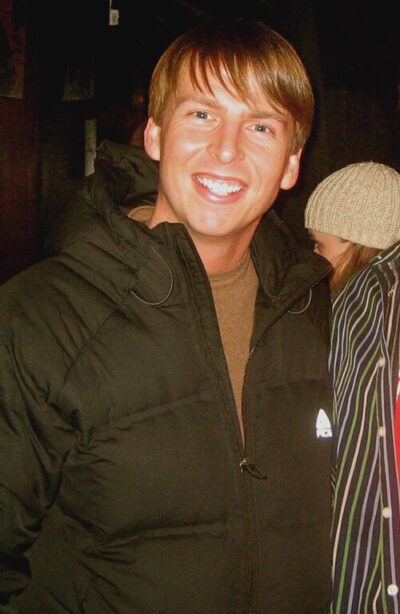
Jack McBrayer
Jack McBrayer is an American actor. Born May 27, 1973, in Macon. Educated at University of Evansville.
Facts
9 facts · 1 confirmed by two sources · 1 cited · 7 from one source
Where this comes from
Papalocal keeps its own record. It started from these sources; what each one said is kept here as it was copied, so a change on their side never changes this page by itself. Tap one to read its version.
What Wikidata says · copied November 15, 2026 · revision 2546591396
- Described as
- American actor
- Born
- May 27, 1973 · 2 references
- Born in
- Macon
- Citizen of
- United States
- Occupation
- comedian; television actor; film actor; voice actor; actor · 1 reference
- Education
- University of Evansville
- Wikipedias with a page
- 30
Wikidata item Q560896 (wikidata.org/wiki/Q560896), public domain (CC0). Copied November 15, 2026.
What Wikipedia says · copied November 15, 2026 · revision 1379177065
Jack McBrayer (; born May 27, 1973) is an American actor and comedian. He gained national exposure for his portrayal of Kenneth Parcell in 30 Rock. For his role in 30 Rock, McBrayer was nominated for Primetime Emmy Award for Outstanding Supporting Actor in a Comedy Series at the 61st Primetime Emmy Awards. He voiced characters such as Fix-It Felix Jr. in the 2012 film Wreck-It Ralph and its 2018 sequel, as well as the title character in the Disney XD series Wander Over Yonder. He has had recurring roles on Phineas and Ferb, Puppy Dog Pals, Amphibia, The Middle, Star Trek: Lower Decks, and the Netflix series Big Mouth.
McBrayer co-created and stars in the Apple TV+ series Hello, Jack! The Kindness Show, which premiered on November 5, 2021.
He also currently hosts the HGTV series Zillow Gone Wild.
- Born, in its opening lines
- May 27, 1973
From the Wikipedia article “Jack McBrayer” (en.wikipedia.org/wiki/Jack_McBrayer), by its contributors, under CC BY-SA 4.0 (creativecommons.org/licenses/by-sa/4.0/). Copied November 15, 2026; not changed.
Confirmed Two sources agree. Cited One source, and it names where it got it. One source One source, without a reference of its own. Sources disagree The sources disagree. We show the best-supported value and keep theirs below.
