
Jack the Ripper
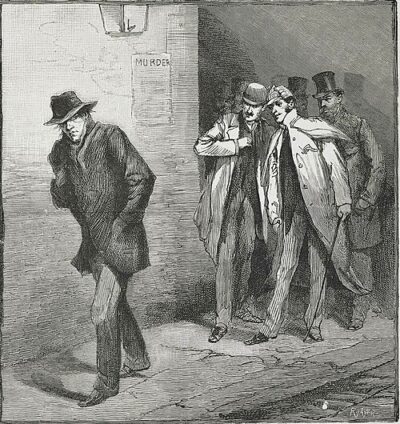
Jack the Ripper was an unidentified 19th century serial killer.
Facts
4 facts · 0 confirmed by two sources · 0 cited · 4 from one source
Where this comes from
Papalocal keeps its own record. It started from these sources; what each one said is kept here as it was copied, so a change on their side never changes this page by itself. Tap one to read its version.
What Wikidata says · copied November 16, 2026 · revision 2563178517
- Described as
- unidentified 19th century serial killer
- Other names
- The Whitechapel Murderer, Leather Apron, Whitechapel Murderer
- Born in
- United Kingdom · 1 reference
- Died in
- London · 1 reference
- Buried in
- London · 1 reference
- Occupation
- serial killer
- Wikipedias with a page
- 88
Wikidata item Q43963 (wikidata.org/wiki/Q43963), public domain (CC0). Copied November 16, 2026.
What Wikipedia says · copied November 16, 2026 · revision 1380612635
Jack the Ripper was an unidentified serial killer active in and around the impoverished Whitechapel district of the East End of London, in 1888. In both criminal case files and the contemporaneous journalistic accounts, the killer was also called the Whitechapel Murderer and Leather Apron.
Attacks ascribed to Jack the Ripper typically involved women working as prostitutes who lived in the slums of the East End of London. Their throats were cut prior to abdominal mutilations. The removal of internal organs from at least three of the victims led to speculation that the killer had some anatomical or surgical knowledge. Rumours that the murders were connected intensified in September and October 1888, and numerous letters were received by media outlets and Scotland Yard from people purporting to be the murderer.
The name "Jack the Ripper" originated in the "Dear Boss letter" written by someone claiming to be the murderer, which was disseminated in the press. The letter is widely believed to have been a hoax and may have been written by journalists to heighten interest in the story and increase their newspapers' circulation. Another, the "From Hell letter", was received by George Lusk of the Whitechapel Vigilance Committee and came with half a preserved human kidney, purportedly taken from one of the victims. The public came to believe in the existence of a single serial killer known as Jack the Ripper, mainly because of both the extraordinarily brutal nature of the murders and extensive media coverage of the crimes.
Extensive newspaper coverage bestowed enduring international notoriety on the Ripper, and the legend solidified. A police investigation into a series of eleven brutal murders committed in Whitechapel and Spitalfields between 1888 and 1891 was unable to connect all the killings conclusively to the 1888 murders. Five victims – Mary Ann Nichols, Annie Chapman, Elizabeth Stride, Catherine Eddowes and Mary Jane Kelly – are known as the "canonical five", and their murders between 31 August and 9 November 1888 are often considered the most likely to be linked. The murders were never solved, and the legends surrounding these crimes have since become a combination of historical research, folklore and pseudohistory, capturing public imagination to the present day.
From the Wikipedia article “Jack the Ripper” (en.wikipedia.org/wiki/Jack_the_Ripper), by its contributors, under CC BY-SA 4.0 (creativecommons.org/licenses/by-sa/4.0/). Copied November 16, 2026; not changed.
Confirmed Two sources agree. Cited One source, and it names where it got it. One source One source, without a reference of its own. Sources disagree The sources disagree. We show the best-supported value and keep theirs below.
