
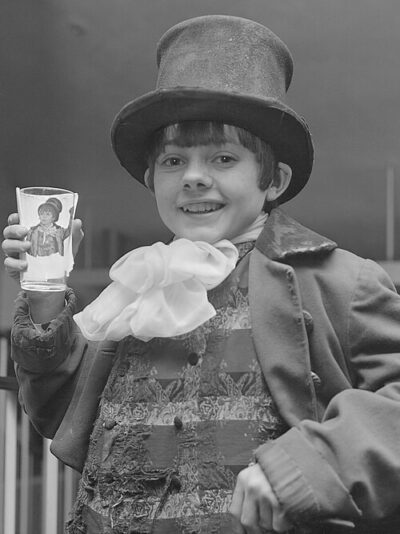
Jack Wild
Jack Wild was a British actor. Born September 30, 1952, in Royton. Died March 1, 2006, in Tebworth. Educated at Barbara Speake Stage School.
Facts
11 facts · 2 confirmed by two sources · 2 cited · 7 from one source
Where this comes from
Papalocal keeps its own record. It started from these sources; what each one said is kept here as it was copied, so a change on their side never changes this page by itself. Tap one to read its version.
What Wikidata says · copied November 17, 2026 · revision 2540427216
- Described as
- British actor (1952–2006)
- Born
- September 30, 1952 · 4 references
- Died
- March 1, 2006 · 3 references
- Born in
- Royton
- Died in
- Tebworth
- Cause of death
- lip and oral cavity carcinoma
- Citizen of
- United Kingdom
- Occupation
- television actor · 1 reference; film actor; singer · 1 reference; actor · 1 reference
- Education
- Barbara Speake Stage School
- Wikipedias with a page
- 26
Wikidata item Q338177 (wikidata.org/wiki/Q338177), public domain (CC0). Copied November 17, 2026.
What Wikipedia says · copied November 17, 2026 · revision 1363625744
Jack Wild (30 September 1952 – 1 March 2006) was an English actor and singer. He is best known for his role as the Artful Dodger in the film Oliver! (1968), for which he received an Academy Award nomination for Best Supporting Actor at the age of 16. As of 2026, Wild is the fourth-youngest nominee in the category. He also received BAFTA Award and Golden Globe Award nominations for the role.
Wild also starred in the television series H.R. Pufnstuf (1969) and its film adaptation Pufnstuf (1970), as well as in the films Melody (1971) and Robin Hood: Prince of Thieves (1991).
- Born, in its opening lines
- September 30, 1952
- Died, in its opening lines
- March 1, 2006
From the Wikipedia article “Jack Wild” (en.wikipedia.org/wiki/Jack_Wild), by its contributors, under CC BY-SA 4.0 (creativecommons.org/licenses/by-sa/4.0/). Copied November 17, 2026; not changed.
Confirmed Two sources agree. Cited One source, and it names where it got it. One source One source, without a reference of its own. Sources disagree The sources disagree. We show the best-supported value and keep theirs below.
