
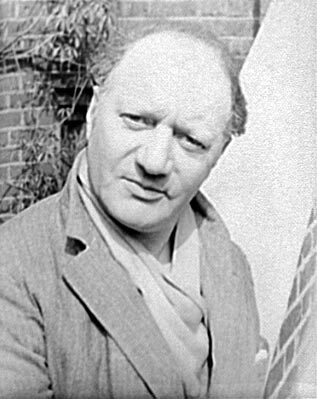
Jacob Epstein
Jacob Epstein was an American-British sculptor. Born November 10, 1880, in New York City. Died August 19, 1959, in London. Known for Oscar Wilde's tomb. Educated at Beaux-Arts de Paris and Académie Julian. Awards include Knight Commander of the Order of the British Empire.
Facts
24 facts · 1 confirmed by two sources · 15 cited · 7 from one source · 1 where the sources disagree
What’s different
- Died: we show August 19, 1959 (Sources disagree). Wikipedia says August 21, 1959
Where this comes from
Papalocal keeps its own record. It started from these sources; what each one said is kept here as it was copied, so a change on their side never changes this page by itself. Tap one to read its version.
What Wikidata says · copied November 15, 2026 · revision 2557941142
- Described as
- American-British sculptor (1880–1959)
- Other names
- Jacob Epstein (Sir), Epstein, Jacob, Sir Epstein, j. epstein, Sir Epstein, Sir Jacob Epstein
- Born
- November 10, 1880 · 14 references
- Died
- August 19, 1959 · 12 references
- Born in
- New York City · 3 references
- Died in
- London · 2 references
- Buried in
- Putney Vale Cemetery · 1 reference
- Citizen of
- United States · 1 reference; United Kingdom · 1 reference
- Occupation
- sculptor · 3 references; painter · 1 reference; draftsperson · 1 reference; artist · 1 reference
- Education
- Beaux-Arts de Paris; Académie Julian
- Genre
- figurative art
- Known for
- Oscar Wilde's tomb
- Awards
- Knight Commander of the Order of the British Empire
- Field
- art of sculpture
- Spouse
- Margaret Dunlop · 1 reference; Kathleen Garman · 2 references
- Children
- Theodore Garman · 1 reference; Kitty Garman · 2 references; Esther Garman · 2 references
- Father
- Max Epstein · 1 reference
- Mother
- Mary Solomon · 1 reference
- Wikipedias with a page
- 30
Wikidata item Q354779 (wikidata.org/wiki/Q354779), public domain (CC0). Copied November 15, 2026.
What Wikipedia says · copied November 15, 2026 · revision 1382982037
Sir Jacob Epstein (, 10 November 1880 – 21 August 1959) was an American and British sculptor who helped pioneer modern sculpture. He was born in the United States, and moved to Europe in 1902, becoming a British subject in 1910.
Early in his career, in 1912, The Pall Mall Gazette described Epstein as "a Sculptor in Revolt, who is in deadly conflict with the ideas of current sculpture." Revolting against ornate, pretty art, he made bold, often harsh and massive forms in bronze or stone. His sculpture is distinguished by its vigorous rough-hewn realism. Avant-garde in concept and style, his works often shocked audiences. This was not only a result of their often explicit sexual content, but also because they abandoned the conventions of classical Greek sculpture favoured by European academic critics and sculptors, to experiment instead with the aesthetics of art traditions as diverse as those of India, China, ancient Greece, West Africa, and the Pacific Islands. His larger sculptures were his most expressive and experimental, but also his most vulnerable.
Such factors may have focused disproportionate attention on certain aspects of Epstein's long and productive career, throughout which he aroused hostility, especially when violating taboos surrounding the depiction of sexuality. He often produced controversial works that challenged ideas on what was appropriate subject matter for public artworks. Epstein would often sculpt the images of friends, casual acquaintances, and even people he spotted on the street. He worked even on his dying day. He also painted; many of his watercolours and gouaches were of Epping Forest, where he lived for a time. These were often exhibited at the Leicester Galleries in London.
Bronze portrait sculpture formed one of Epstein's staple products, and perhaps the best known. These sculptures were often executed with roughly textured surfaces, expressively manipulating small surface planes and facial details.
Epstein was Jewish, and negative reviews of his work sometimes took on an antisemitic flavour, though he did not attribute the "average unfavorable criticism" of his work to antisemitism.
After Epstein died, Henry Moore wrote a tribute in The Sunday Times which included a recognition of Epstein's central role in the development of modern sculpture in Britain. "He took the brickbats, he took the insults, he faced the howls of derision with which artists since Rembrandt have learned to become familiar. And as far as sculpture in this century is concerned he took them first.... We have lost a great sculptor and a great man."
- Born, in its opening lines
- November 10, 1880
- Died, in its opening lines
- August 21, 1959
From the Wikipedia article “Jacob Epstein” (en.wikipedia.org/wiki/Jacob_Epstein), by its contributors, under CC BY-SA 4.0 (creativecommons.org/licenses/by-sa/4.0/). Copied November 15, 2026; not changed.
Confirmed Two sources agree. Cited One source, and it names where it got it. One source One source, without a reference of its own. Sources disagree The sources disagree. We show the best-supported value and keep theirs below.
