
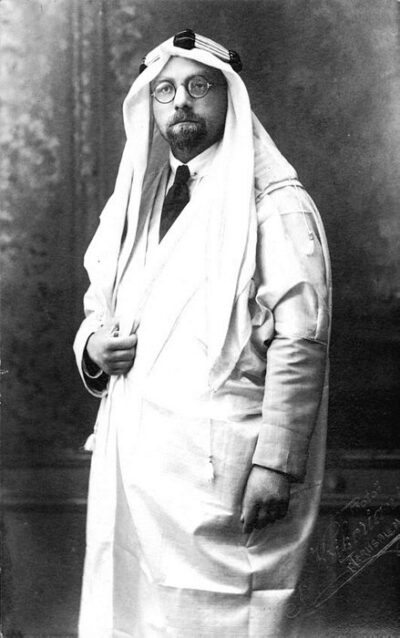
Jacob Israël de Haan
Jacob Israël de Haan was a Dutch lawyer, legal scholar, diplomat, journalist, novelist and poet, assassinated by the Haganah. Born December 31, 1881, in Smilde. Died June 30, 1924, in Jaffa Road. Educated at University of Amsterdam.
Facts
17 facts · 2 confirmed by two sources · 3 cited · 12 from one source
Where this comes from
Papalocal keeps its own record. It started from these sources; what each one said is kept here as it was copied, so a change on their side never changes this page by itself. Tap one to read its version.
What Wikidata says · copied November 18, 2026 · revision 2504659109
- Described as
- Dutch lawyer, legal scholar, diplomat, journalist, novelist and poet, assassinated by the Haganah (1881-1924)
- Other names
- J.I. de Haan
- Born
- December 31, 1881 · 5 references
- Died
- June 30, 1924 · 5 references
- Born in
- Smilde · 1 reference
- Died in
- Jaffa Road
- Buried in
- Mount of Olives Jewish Cemetery
- Citizen of
- Kingdom of the Netherlands · 1 reference
- Occupation
- poet; writer · 1 reference; jurist; journalist · 1 reference; poet lawyer; university teacher · 1 reference
- Worked for
- University of Amsterdam (1916–1918) · 1 reference; Edah HaChareidis (–1924)
- Education
- University of Amsterdam
- Siblings
- Carry van Bruggen
- Religion
- Judaism
- Wikipedias with a page
- 20
Wikidata item Q733640 (wikidata.org/wiki/Q733640), public domain (CC0). Copied November 18, 2026.
What Wikipedia says · copied November 18, 2026 · revision 1382891906
Jacob Israël de Haan (31 December 1881 – 30 June 1924) was a Dutch Jewish writer, poet, journalist, and political activist. First known for Pijpelijntjes (1904), the earliest Dutch novel to portray a homosexual relationship, he later became noted for his journalism, his studies of Russian prisons, and his poetry.
After embracing Zionism, he moved to Jerusalem in 1919, where he gradually became the leading political spokesman of the Haredi community and a vocal opponent of the Zionist leadership. De Haan’s attempts to negotiate with Arab leaders and the British authorities made him a controversial figure, and he was assassinated by the Zionist paramilitary organisation Haganah in 1924, the first political killing within the Jewish community in Mandatory Palestine. His literary work and political legacy remain the subject of ongoing debate.
- Born, in its opening lines
- December 31, 1881
- Died, in its opening lines
- June 30, 1924
From the Wikipedia article “Jacob Israël de Haan” (en.wikipedia.org/wiki/Jacob_Israël_de_Haan), by its contributors, under CC BY-SA 4.0 (creativecommons.org/licenses/by-sa/4.0/). Copied November 18, 2026; not changed.
Confirmed Two sources agree. Cited One source, and it names where it got it. One source One source, without a reference of its own. Sources disagree The sources disagree. We show the best-supported value and keep theirs below.
