
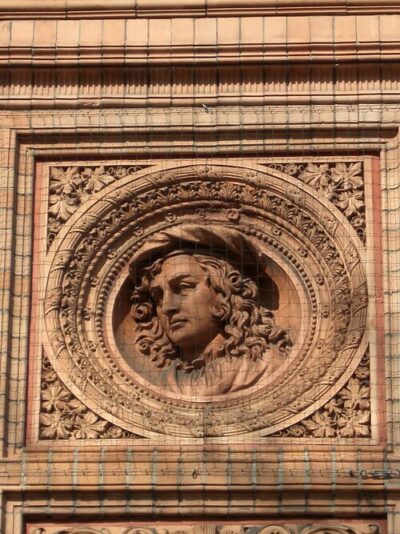
Jacob van Ruisdael
Jacob van Ruisdael was a Dutch painter and engraver. Born 1628, in Haarlem. Died March 10, 1682, in Haarlem. Known for Castle Bentheim, The Jewish Cemetery and The Ray of Light.
Facts
23 facts · 1 confirmed by two sources · 9 cited · 12 from one source · 1 where the sources disagree
What’s different
- Born: we show 1628 (Sources disagree). Wikipedia says c. 1629
- Died: we show March 10, 1682 (Confirmed). Wikidata also lists March 14, 1682 and June 14, 1682
Where this comes from
Papalocal keeps its own record. It started from these sources; what each one said is kept here as it was copied, so a change on their side never changes this page by itself. Tap one to read its version.
What Wikidata says · copied November 16, 2026 · revision 2561210121
- Described as
- Dutch painter and engraver (1628-1682)
- Other names
- Jacob Isaakszoon van Ruisdael, Jacob Isaaksz. van Ruisdael, Jacob Isaaksz van Ruisdael, Jacob van Ruijsdael, Jacob van Ruysdael, Ruisdael, Jacob Van Ruisdael, Jacob Van Ruysdael, Ruysdael, Jacob Isaacksz. van Ruisdael, Jacob Isacksoon van Ruysdael, Jacques Ruysdael
- Born
- 1628 · 16 references
- Died
- March 10, 1682 · 3 references; March 14, 1682 · 1 reference; June 14, 1682 · 1 reference
- Born in
- Haarlem · 2 references
- Died in
- Haarlem
- Buried in
- Grote Kerk
- Name at birth
- Jacob Isaackszoon Van Ruisdael
- Citizen of
- Dutch Republic · 1 reference
- Occupation
- painter · 4 references; printmaker; landscape painter · 2 references; etcher · 2 references; graphic artist · 1 reference; draftsperson · 2 references; physician · 1 reference; artist · 1 reference
- Member of
- Haarlem Guild of St. Luke
- Genre
- landscape painting
- Known for
- Castle Bentheim; The Jewish Cemetery; The Ray of Light; The Windmill at Wijk bij Duurstede
- Field
- painting · 2 references
- Father
- Isaack van Ruisdael
- Wikipedias with a page
- 48
Wikidata item Q213612 (wikidata.org/wiki/Q213612), public domain (CC0). Copied November 16, 2026.
What Wikipedia says · copied November 16, 2026 · revision 1383148627
Jacob Isaackszoon van Ruisdael (Dutch pronunciation: [ˈjaːkɔp fɑn ˈrœyzdaːl] ; c. 1629 – 10 March 1682) was a Dutch painter, draughtsman, and etcher. He is generally considered the pre-eminent landscape painter of the Dutch Golden Age, a period of great wealth and cultural achievement when Dutch painting became highly popular.
Prolific and versatile, Ruisdael depicted a wide variety of landscape subjects. From 1646 he painted Dutch countryside scenes of remarkable quality for a young man. After a trip to Germany in 1650, his landscapes took on a more heroic character. In his late work, conducted when he lived and worked in Amsterdam, he added city panoramas and seascapes to his regular repertoire. In these, the sky often took up two-thirds of the canvas. In total he produced more than 150 Scandinavian views featuring waterfalls.
Ruisdael's only registered pupil was Meindert Hobbema, one of several artists who painted figures in his landscapes. Hobbema's work has at times been confused with Ruisdael's. Ruisdael always spelt his name thus: Ruisdael, not Ruysdael.
Ruisdael's work was in demand in the Dutch Republic during his lifetime. Today it is spread across private and institutional collections around the world; the National Gallery in London, the Rijksmuseum in Amsterdam, and the Hermitage Museum in St. Petersburg hold the largest collections. Ruisdael shaped landscape painting traditions worldwide, from the English Romantics to the Barbizon school in France, and the Hudson River School in the US, and influenced generations of Dutch landscape artists.
- Born, in its opening lines
- c. 1629
- Died, in its opening lines
- March 10, 1682
From the Wikipedia article “Jacob van Ruisdael” (en.wikipedia.org/wiki/Jacob_van_Ruisdael), by its contributors, under CC BY-SA 4.0 (creativecommons.org/licenses/by-sa/4.0/). Copied November 16, 2026; not changed.
Confirmed Two sources agree. Cited One source, and it names where it got it. One source One source, without a reference of its own. Sources disagree The sources disagree. We show the best-supported value and keep theirs below.
