
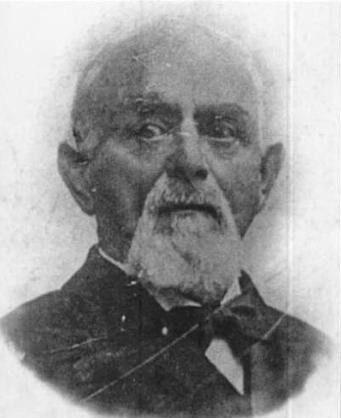
Jacob W. Davis
Jacob W. Davis was an American tailor. Born May 14, 1831, in Riga. Died January 20, 1908, in San Francisco.
Facts
11 facts · 2 confirmed by two sources · 2 cited · 6 from one source · 1 where the sources disagree
What’s different
- Name at birth: we show Jacob Youphes (Sources disagree). Wikidata also lists Jākobs Jufess
Where this comes from
Papalocal keeps its own record. It started from these sources; what each one said is kept here as it was copied, so a change on their side never changes this page by itself. Tap one to read its version.
What Wikidata says · copied November 16, 2026 · revision 2526571678
- Described as
- American tailor (1831–1908)
- Other names
- Jacob Davis, Jacob Youphes, Jacob William Davis
- Born
- May 14, 1831
- Died
- January 20, 1908 · 1 reference
- Born in
- Riga
- Died in
- San Francisco · 1 reference
- Buried in
- Hills of Eternity Memorial Park · 1 reference
- Name at birth
- Jākobs Jufess; Jacob Youphes · 1 reference
- Citizen of
- United States
- Occupation
- inventor; entrepreneur; tailor
- Field
- sewing
- Wikipedias with a page
- 22
Wikidata item Q1488960 (wikidata.org/wiki/Q1488960), public domain (CC0). Copied November 16, 2026.
What Wikipedia says · copied November 16, 2026 · revision 1361136610
Jacob William Davis (Russian: Якоб Яковлевич Юфес , May 14, 1831 – January 20, 1908) was a Russian-American tailor who is credited with inventing modern jeans. Growing up in Russian Empire, he emigrated to the United States as a young man and spent some time in Canada as well. He invented jeans by using sturdy cloth and rivets to strengthen weak points in the seams, and partnered with Levi Strauss to mass-produce them.
- Born, in its opening lines
- May 14, 1831
- Died, in its opening lines
- January 20, 1908
From the Wikipedia article “Jacob W. Davis” (en.wikipedia.org/wiki/Jacob_W._Davis), by its contributors, under CC BY-SA 4.0 (creativecommons.org/licenses/by-sa/4.0/). Copied November 16, 2026; not changed.
Confirmed Two sources agree. Cited One source, and it names where it got it. One source One source, without a reference of its own. Sources disagree The sources disagree. We show the best-supported value and keep theirs below.
