
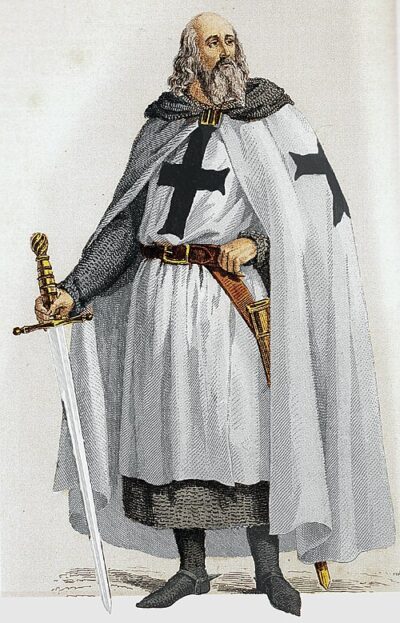
Jacques de Molay
Jacques de Molay was a Grand Master of the Knights Templar. Died March 18, 1314, in Paris. Positions held include Grand Master of the Knights Templar (1292–1314) and superior general.
Facts
12 facts · 0 confirmed by two sources · 6 cited · 6 from one source
Where this comes from
Papalocal keeps its own record. It started from these sources; what each one said is kept here as it was copied, so a change on their side never changes this page by itself. Tap one to read its version.
What Wikidata says · copied November 16, 2026 · revision 2568063518
- Described as
- Grand Master of the Knights Templar
- Died
- March 18, 1314 · 1 reference
- Born in
- Molay · 1 reference
- Died in
- Paris · 1 reference
- Cause of death
- death by burning · 1 reference
- Citizen of
- Holy Roman Empire
- Occupation
- leader; knight; Grand Master; monk · 1 reference
- Positions held
- Grand Master of the Knights Templar (1292–1314) · 1 reference; superior general · 1 reference
- Religion
- Catholicism
- Wikipedias with a page
- 50
Wikidata item Q208215 (wikidata.org/wiki/Q208215), public domain (CC0). Copied November 16, 2026.
What Wikipedia says · copied November 16, 2026 · revision 1385269481
Jacques de Molay (French: [də mɔlɛ]; c. 1240–1250 – 11 or 18 March 1314), also spelled "Molai", was the 23rd and last grand master of the Knights Templar, leading the order sometime before 20 April 1292 until it was dissolved by order of Pope Clement V in 1312. Though little is known of his actual life and deeds except for his last years as Grand Master, he is one of the best known Templars.
Jacques de Molay's goal as grand master was to reform the order, and adjust it to the situation in the Holy Land during the waning days of the Crusades. As European support for the Crusades diminished, the French monarchy sought to disband the order and claim the wealth of the Templars as its own. King Philip IV of France, deeply in debt to the Templars, had Molay and many other French Templars arrested in 1307 and tortured into making false confessions. When Molay later retracted his confession, Philip had him burned upon a scaffold on an island in the River Seine in March, 1314. Both the sudden end of the centuries-old order of Templars and the dramatic execution of its last leader turned Molay into a legendary figure.
From the Wikipedia article “Jacques de Molay” (en.wikipedia.org/wiki/Jacques_de_Molay), by its contributors, under CC BY-SA 4.0 (creativecommons.org/licenses/by-sa/4.0/). Copied November 16, 2026; not changed.
Confirmed Two sources agree. Cited One source, and it names where it got it. One source One source, without a reference of its own. Sources disagree The sources disagree. We show the best-supported value and keep theirs below.
