
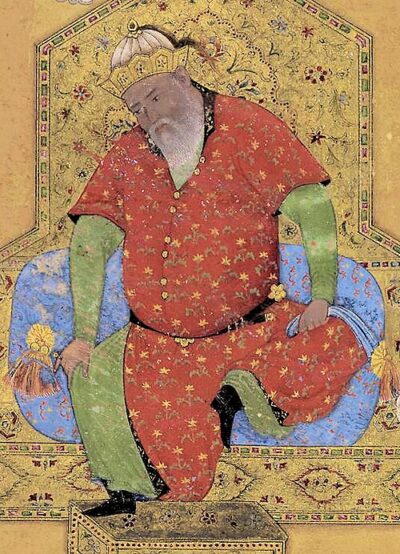
Jalal ud din Firuz Khalji
Jalal ud din Firuz Khalji was the 12th Sultan of the Delhi Sultanate and 1st from the Khalji dynasty. Born October 14, 1220, in Afghanistan. Died July 19, 1296, in Kara, Uttar Pradesh. Positions held include Sultan of Hindustan (Sultan of Delhi) (1290–1296).
Facts
10 facts · 2 confirmed by two sources · 0 cited · 8 from one source
Where this comes from
Papalocal keeps its own record. It started from these sources; what each one said is kept here as it was copied, so a change on their side never changes this page by itself. Tap one to read its version.
What Wikidata says · copied November 16, 2026 · revision 2563764648
- Described as
- 12th Sultan of the Delhi Sultanate and 1st from the Khalji dynasty
- Other names
- Jalal-ud-din Khalji
- Born
- October 14, 1220
- Died
- July 19, 1296
- Born in
- Afghanistan
- Died in
- Kara, Uttar Pradesh
- Buried in
- Delhi
- Positions held
- Sultan of Hindustan (Sultan of Delhi) (1290–1296)
- Children
- Malika-i-Jahan; Ruknuddin Ibrahim · 1 reference
- Father
- NN
- Religion
- Sunni Islam
- Wikipedias with a page
- 33
Wikidata item Q2691885 (wikidata.org/wiki/Q2691885), public domain (CC0). Copied November 16, 2026.
What Wikipedia says · copied November 16, 2026 · revision 1385148305
Jalal-ud-Din Khalji, also known as Firuz al-Din Khalji, Jalaluddin Khilji or Firuz II (Persian: جلال الدین خلجی; c. 1220 – 19 July 1296) was the Sultan of Delhi from 1290 until his death in 1296. He was the founder and first Sultan of the Khalji dynasty that ruled the Delhi Sultanate of India from 1290 to 1320.
Originally named Firuz, Jalal-ud-Din started his career as an officer of the Mamluk dynasty, and rose to an important position under Sultan Muizzuddin Qaiqabad. After Qaiqabad was paralyzed, a group of nobles appointed his infant son Shamsuddin Kayumars as the new Sultan, and subsequently tried to kill Jalal-ud-Din. Instead, Jalal-ud-Din had the group of nobles killed and became regent. A few months later, he deposed Kayumars, and became the new Sultan.
As a Sultan, he repulsed a Mongol invasion, and allowed many Mongols to settle in India after their conversion to Islam. He captured Mandawar and Jhain from the Chahamana king Hammira, although he was unable to capture the Chahamana capital Ranthambore. During his reign, his nephew Ali Gurshasp raided Bhilsa in 1293 and Devagiri in 1296.
Jalal-ud-Din, who was around 70 years old at the time of his ascension, was known as a mild-mannered, humble and kind monarch to the general public. During the first year of his reign, he ruled from Kilokhri to avoid confrontations with the old Turkic nobles of the imperial capital Delhi. Several nobles considered him as a weak ruler, and unsuccessfully attempted to overthrow him at different times. He meted out lenient punishments to the rebels, except in case of a dervish Sidi Maula, who was executed for allegedly conspiring to dethrone him. Jalal-ud-Din was ultimately assassinated by his nephew Ali Gurshasp, who subsequently ascended the throne as Alauddin Khalji.
- Born, in its opening lines
- c. 1220
- Died, in its opening lines
- July 19, 1296
From the Wikipedia article “Jalal-ud-Din Khalji” (en.wikipedia.org/wiki/Jalal-ud-Din_Khalji), by its contributors, under CC BY-SA 4.0 (creativecommons.org/licenses/by-sa/4.0/). Copied November 16, 2026; not changed.
Confirmed Two sources agree. Cited One source, and it names where it got it. One source One source, without a reference of its own. Sources disagree The sources disagree. We show the best-supported value and keep theirs below.
