
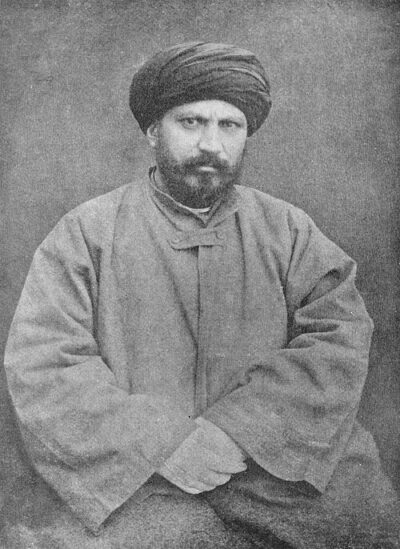
Jamal al-Din al-Afghani
Jamal al-Din al-Afghani was a Political activist and Islamic ideologist. Born 1838, in Asadabad. Died March 9, 1897, in Constantinople.
Facts
16 facts · 0 confirmed by two sources · 7 cited · 7 from one source · 2 where the sources disagree
What’s different
- Born: we show 1838 (Sources disagree). Wikidata also lists 1839
- Died: we show March 9, 1897 (Sources disagree). Wikidata also lists 1897
Where this comes from
Papalocal keeps its own record. It started from these sources; what each one said is kept here as it was copied, so a change on their side never changes this page by itself. Tap one to read its version.
What Wikidata says · copied November 16, 2026 · revision 2569807102
- Described as
- Political activist and Islamic ideologist (1838–1897)
- Other names
- Jamal-al-Din Afghani, Cemâleddîn-i Efgānî, Al-Afghani
- Born
- 1838 · 4 references; 1839 · 1 reference
- Died
- March 9, 1897 · 4 references; 1897 · 1 reference
- Born in
- Asadabad · 2 references
- Died in
- Constantinople · 1 reference
- Buried in
- Kabul Province
- Cause of death
- jaw cancer
- Citizen of
- Afghanistan
- Occupation
- theologian; journal editor · 2 references; journalist · 2 references; politician · 1 reference; activist; religious writer; philosopher · 1 reference; writer · 1 reference
- Religion
- Islam
- Wikipedias with a page
- 58
Wikidata item Q298434 (wikidata.org/wiki/Q298434), public domain (CC0). Copied November 16, 2026.
What Wikipedia says · copied November 16, 2026 · revision 1383232564
Sayyid Jamāl al-Dīn al-Afghānī (Persian/Pashto: سید جمال الدین افغانی), also known as Jamāl ad-Dīn Asadābādī (Persian/Pashto: سید جمالالدین اسدآبادی) and commonly known as Al-Afghani (1838/1839 – 9 March 1897), was a political activist and Islamic ideologist who travelled throughout the Muslim world during the late 19th century. He is one of the founders of Islamic Modernism as well as an advocate of Pan-Islamic unity in India against the British.
He has been described as having been less interested in minor differences in Islamic jurisprudence than he was in organizing a united response to Western pressure. He is also known for his involvement with his follower Mirza Reza Kermani in the successful plot to assassinate Shah Naser-al-Din, whom Afghani considered to be making too many concessions to foreign powers, especially the British Empire.
From the Wikipedia article “Jamal al-Din al-Afghani” (en.wikipedia.org/wiki/Jamal_al-Din_al-Afghani), by its contributors, under CC BY-SA 4.0 (creativecommons.org/licenses/by-sa/4.0/). Copied November 16, 2026; not changed.
Confirmed Two sources agree. Cited One source, and it names where it got it. One source One source, without a reference of its own. Sources disagree The sources disagree. We show the best-supported value and keep theirs below.
