
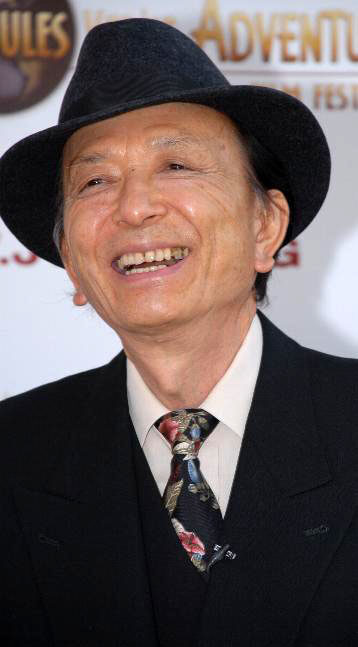
James Hong
James Hong is an American actor. Born February 22, 1929, in Minneapolis. Educated at University of Southern California and USC Viterbi School of Engineering. Awards include Annie Award for Outstanding Achievement for Voice Acting in an Animated Television/Broadcast Production.
Facts
18 facts · 1 confirmed by two sources · 3 cited · 14 from one source
Where this comes from
Papalocal keeps its own record. It started from these sources; what each one said is kept here as it was copied, so a change on their side never changes this page by itself. Tap one to read its version.
What Wikidata says · copied November 15, 2026 · revision 2567681643
- Described as
- American actor (born 1929)
- Other names
- James Haig, Jimmy Hong, Jim Hong, James Young
- Born
- February 22, 1929 · 1 reference
- Born in
- Minneapolis · 1 reference
- Citizen of
- United States
- Occupation
- actor · 1 reference; film director; screenwriter; film producer; film actor; television actor; voice actor; stage actor · 1 reference
- Education
- University of Southern California; USC Viterbi School of Engineering; University of Minnesota · 1 reference; Central High School · 1 reference
- Awards
- Annie Award for Outstanding Achievement for Voice Acting in an Animated Television/Broadcast Production (2011) · 1 reference
- Lived in
- Los Angeles
- Website
- https://www.jameshong.com
- Wikipedias with a page
- 39
Wikidata item Q358990 (wikidata.org/wiki/Q358990), public domain (CC0). Copied November 15, 2026.
What Wikipedia says · copied November 15, 2026 · revision 1383578636
James Hong (born February 22, 1929) is an American actor, producer, and director. Known as one of the most prolific character actors in Hollywood history, he has worked in over 600 productions in American media since the Golden Age of Hollywood in the 1950s. In 2022, he received a star on the Hollywood Walk of Fame for his contributions to the American film and television industries.
Earlier in his career, Hong co-founded East West Players, the first Asian American theatre organization and the longest continuously running minority theatre in the United States, to increase Asian American representation in the industry. Hong became known to audiences through starring in the detective series The New Adventures of Charlie Chan (1957–1958), and appeared in numerous shows including Bonanza (1960), Perry Mason (1962–1963), The Man from U.N.C.L.E. (1965–1966), I Spy (1965–1967), Hawaii Five-O (1969–1974), and Kung Fu (1972–1975). He also guest-starred in numerous sitcoms including his memorable role as Bruce in the Seinfeld episode "The Chinese Restaurant" (1991).
Hong has appeared in both comedic and dramatic film roles, including Soldier of Fortune (1955), Flower Drum Song (1961), The Sand Pebbles (1966), Chinatown (1974) and its sequel The Two Jakes (1990), The In-Laws (1979), Airplane! (1980), True Confessions (1981), Blade Runner (1982), Big Trouble in Little China (1986), Wayne's World 2 (1993), Balls of Fury (2007), Safe (2012), and R.I.P.D. (2013). Hong gained newfound prominence and acclaim for his role as the elderly grandfather, Gong Gong, in the Academy Award–winning science fiction absurdist comedy film Everything Everywhere All at Once (2022), for which he earned a Screen Actors Guild Award alongside its ensemble.
As a voice actor, Hong's roles include Chi-Fu in Mulan (1998), Daolon Wong on the animated television series Jackie Chan Adventures (2002–2004), Professor Chang in Teen Titans (2003–2006), Mr. Ping in the Kung Fu Panda media franchise (2008–present), Zong Shi in Trollhunters: Rise of the Titans (2021), Father Level Bests in Wendell & Wild (2022), and Mr. Gao in Turning Red (2022).
- Born, in its opening lines
- February 22, 1929
From the Wikipedia article “James Hong” (en.wikipedia.org/wiki/James_Hong), by its contributors, under CC BY-SA 4.0 (creativecommons.org/licenses/by-sa/4.0/). Copied November 15, 2026; not changed.
Confirmed Two sources agree. Cited One source, and it names where it got it. One source One source, without a reference of its own. Sources disagree The sources disagree. We show the best-supported value and keep theirs below.
