
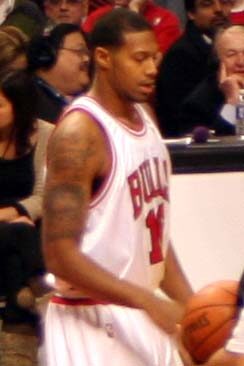
James Johnson
James Johnson is an American basketball player. Born February 20, 1987, in Cheyenne. Teams include Sacramento Kings, Chicago Bulls and Memphis Grizzlies. Educated at Cheyenne East High School and Wake Forest University.
Facts
14 facts · 1 confirmed by two sources · 5 cited · 8 from one source
Where this comes from
Papalocal keeps its own record. It started from these sources; what each one said is kept here as it was copied, so a change on their side never changes this page by itself. Tap one to read its version.
What Wikidata says · copied November 16, 2026 · revision 2529655854
- Described as
- American basketball player (born 1987)
- Other names
- James Patrick Johnson
- Born
- February 20, 1987 · 1 reference
- Born in
- Cheyenne
- Name at birth
- James Patrick Johnson
- Citizen of
- United States · 1 reference
- Occupation
- basketball player · 1 reference
- Education
- Cheyenne East High School; Wake Forest University · 1 reference
- Teams
- Sacramento Kings; Chicago Bulls; Memphis Grizzlies; Miami Heat; Wake Forest Demon Deacons men's basketball (2007–2009) · 1 reference
- Sport
- basketball · 1 reference
- Height
- 2.06 m (6 ft 9 in)
- Wikipedias with a page
- 21
Wikidata item Q671294 (wikidata.org/wiki/Q671294), public domain (CC0). Copied November 16, 2026.
What Wikipedia says · copied November 16, 2026 · revision 1385702402
James Patrick Johnson (born February 20, 1987) is an American professional basketball player who last played for the Indiana Pacers of the National Basketball Association (NBA). He was the starting power forward for the Wake Forest Demon Deacons from 2007 to 2009. He was drafted 16th overall in the 2009 NBA draft by the Chicago Bulls.
- Born, in its opening lines
- February 20, 1987
From the Wikipedia article “James Johnson (basketball, born 1987)” (en.wikipedia.org/wiki/James_Johnson_(basketball,_born_1987)), by its contributors, under CC BY-SA 4.0 (creativecommons.org/licenses/by-sa/4.0/). Copied November 16, 2026; not changed.
Confirmed Two sources agree. Cited One source, and it names where it got it. One source One source, without a reference of its own. Sources disagree The sources disagree. We show the best-supported value and keep theirs below.
