
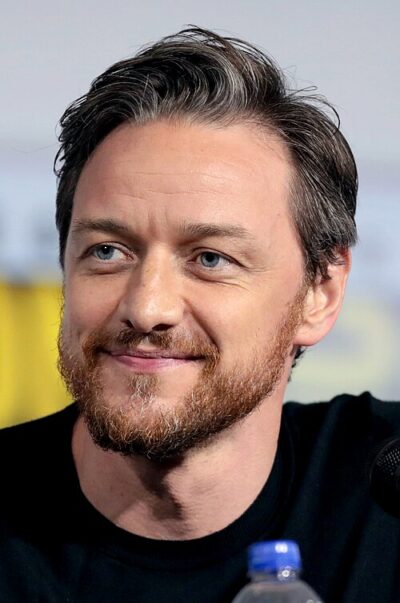
James McAvoy
James McAvoy is a Scottish actor. Born April 21, 1979, in Glasgow. Known for Frank Herbert's Children of Dune, ShakespeaRe-Told and The Chronicles of Narnia: The Lion, the Witch and the Wardrobe. Educated at St. Thomas Aquinas Secondary School, Glasgow and Royal Conservatoire of Scotland. Awards include BAFTA Rising Star Award, London Film Critics Circle Award for British Actor of the Year and British Independent Film Award for Best Performance by an Actor in a British Independent Film.
Facts
30 facts · 1 confirmed by two sources · 6 cited · 23 from one source
Where this comes from
Papalocal keeps its own record. It started from these sources; what each one said is kept here as it was copied, so a change on their side never changes this page by itself. Tap one to read its version.
What Wikidata says · copied November 16, 2026 · revision 2565507898
- Described as
- Scottish actor (born 1979)
- Other names
- James Andrew McAvoy
- Born
- April 21, 1979 · 4 references
- Born in
- Glasgow · 1 reference
- Citizen of
- United Kingdom
- Occupation
- television actor; film actor; voice actor; stage actor; actor · 1 reference; television presenter; film director
- Education
- St. Thomas Aquinas Secondary School, Glasgow; Royal Conservatoire of Scotland (–2000)
- Known for
- Frank Herbert's Children of Dune; ShakespeaRe-Told; The Chronicles of Narnia: The Lion, the Witch and the Wardrobe; Starter for 10; The Last King of Scotland; Atonement; The Last Station; X-Men: First Class; Filth; X-Men: Days of Future Past
- Awards
- BAFTA Rising Star Award (2006) · 1 reference; London Film Critics Circle Award for British Actor of the Year (2008) · 1 reference; British Independent Film Award for Best Performance by an Actor in a British Independent Film (2013) · 1 reference
- Spouse
- Anne-Marie Duff (2006–2016)
- Siblings
- Joy McAvoy
- Religion
- Christianity
- Lived in
- London; Crouch End · 1 reference
- Wikipedias with a page
- 69
Wikidata item Q193659 (wikidata.org/wiki/Q193659), public domain (CC0). Copied November 16, 2026.
What Wikipedia says · copied November 16, 2026 · revision 1385773241
James McAvoy (; born 21 April 1979) is a Scottish actor and director. He made his acting debut as a teenager in The Near Room (1995) and appeared mostly on television until 2003, when his film career began. His television work includes the thriller State of Play (2003), the science fiction miniseries Frank Herbert's Children of Dune (2003), and the drama series Shameless (2004–2005).
McAvoy gained recognition for playing Mr. Tumnus in the fantasy film The Chronicles of Narnia: The Lion, the Witch and the Wardrobe (2005) and an assassin in the action film Wanted (2008). After winning the inaugural BAFTA Rising Star Award in 2006, his performances in the period dramas The Last King of Scotland (2006) and Atonement (2007) gained him BAFTA Award nominations. In 2011 he voiced the title characters in Arthur Christmas and Gnomeo & Juliet, and portrayed Charles Xavier in the superhero film X-Men: First Class, a role he reprised in four subsequent installments of the X-Men series.
McAvoy gained praise for starring in the independent crime film Filth (2013), and appeared as a superpowered man with 23 dissociative identities in M. Night Shyamalan's Split (2016) and its successor Glass (2019). He portrayed Lord Asriel in the fantasy series His Dark Materials from 2019 to 2022, and starred as Bill Denbrough in the horror film It Chapter Two (2019). In the 2020s, McAvoy starred in the horror film Speak No Evil (2024), and made his directorial debut with California Schemin' (2025).
On stage, McAvoy has performed in several West End productions, such as Three Days of Rain in 2010, Macbeth in 2013, The Ruling Class in 2015, and Cyrano de Bergerac in 2020, for which he received four nominations for the Laurence Olivier Award for Best Actor.
- Born, in its opening lines
- April 21, 1979
From the Wikipedia article “James McAvoy” (en.wikipedia.org/wiki/James_McAvoy), by its contributors, under CC BY-SA 4.0 (creativecommons.org/licenses/by-sa/4.0/). Copied November 16, 2026; not changed.
Confirmed Two sources agree. Cited One source, and it names where it got it. One source One source, without a reference of its own. Sources disagree The sources disagree. We show the best-supported value and keep theirs below.
