
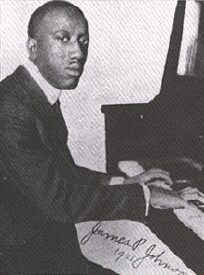
James P. Johnson
James P. Johnson was an American pianist and composer. Born February 1, 1894, in New Brunswick. Died November 17, 1955, in New York City.
Facts
15 facts · 2 confirmed by two sources · 6 cited · 7 from one source
Where this comes from
Papalocal keeps its own record. It started from these sources; what each one said is kept here as it was copied, so a change on their side never changes this page by itself. Tap one to read its version.
What Wikidata says · copied November 15, 2026 · revision 2563866525
- Described as
- American pianist and composer (1894–1955)
- Other names
- James Price Johnson
- Born
- February 1, 1894 · 10 references
- Died
- November 17, 1955 · 10 references
- Born in
- New Brunswick · 2 references
- Died in
- New York City · 1 reference
- Buried in
- Mount Olivet Cemetery · 1 reference
- Cause of death
- stroke · 1 reference
- Citizen of
- United States
- Occupation
- composer · 1 reference; pianist · 1 reference; jazz musician · 1 reference
- Genre
- jazz; ragtime · 1 reference; stride piano · 1 reference
- Instrument
- piano
- Record label
- Blue Note
- Wikipedias with a page
- 25
Wikidata item Q550541 (wikidata.org/wiki/Q550541), public domain (CC0). Copied November 15, 2026.
What Wikipedia says · copied November 15, 2026 · revision 1374931436
James Price Johnson (February 1, 1894 – November 17, 1955) was an American pianist and composer. A pioneer of stride piano, he was one of the most important pianists in the early era of recording, and like Jelly Roll Morton, one of the key figures in the evolution of ragtime into what was eventually called jazz. Johnson was a major influence on Count Basie, Duke Ellington, Art Tatum, Thelonious Monk, and Fats Waller, who was his student. According to Hound Dog, the 2009 biography of the song-writing partnership between Mike Stoller and Jerry Leiber, James P. Johnson also gave lessons to Stoller.
Johnson composed many hit songs, including the unofficial anthem of the Roaring Twenties, "The Charleston", and he remained the acknowledged king of New York jazz pianists through most of the 1930s. Johnson's artistry, influence on early popular music, and contributions to musical theatre are often overlooked, and as such, he has been referred to by musicologist David Schiff as "The Invisible Pianist".
- Born, in its opening lines
- February 1, 1894
- Died, in its opening lines
- November 17, 1955
From the Wikipedia article “James P. Johnson” (en.wikipedia.org/wiki/James_P._Johnson), by its contributors, under CC BY-SA 4.0 (creativecommons.org/licenses/by-sa/4.0/). Copied November 15, 2026; not changed.
Confirmed Two sources agree. Cited One source, and it names where it got it. One source One source, without a reference of its own. Sources disagree The sources disagree. We show the best-supported value and keep theirs below.
