
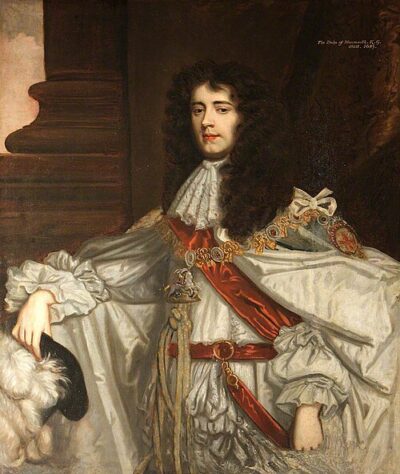
James Scott, 1st Duke of Monmouth
James Scott, 1st Duke of Monmouth was an English nobleman and soldier. Born April 9, 1649, in Rotterdam. Died July 15, 1685, in Tower Hill. Positions held include Member of the Privy Council of the United Kingdom, rector (1674–1682) and Lord Lieutenant of the East Riding of Yorkshire (1673–1679). Awards include Knight of the Garter.
Facts
39 facts · 2 confirmed by two sources · 16 cited · 21 from one source
Where this comes from
Papalocal keeps its own record. It started from these sources; what each one said is kept here as it was copied, so a change on their side never changes this page by itself. Tap one to read its version.
What Wikidata says · copied November 16, 2026 · revision 2563649330
- Described as
- English nobleman and soldier (1649–1685)
- Other names
- James Scott, James, Duke of Monmouth, James Crofts
- Born
- April 9, 1649 · 6 references
- Died
- July 15, 1685 · 7 references
- Born in
- Rotterdam · 1 reference
- Died in
- Tower Hill · 1 reference
- Buried in
- Church of St Peter ad Vincula, Tower Hamlets
- Cause of death
- decapitation
- Citizen of
- Kingdom of England
- Occupation
- military officer; military leader · 1 reference
- Positions held
- Member of the Privy Council of the United Kingdom; rector (1674–1682); Lord Lieutenant of the East Riding of Yorkshire (1673–1679); Master of the Horse (England) (1674–1679); Chancellor of the University of Cambridge (1674–1682)
- Awards
- Knight of the Garter (1663) · 1 reference
- Spouse
- Anne Scott, 1st Duchess of Buccleuch (1663–1685) · 3 references
- Children
- James Scott, Earl of Dalkeith · 1 reference; Henry Scott, 1st Earl of Deloraine · 1 reference; James Crofts · 1 reference; Lady Charlotte Scott · 1 reference; Charles Scott, Earl of Doncaster · 2 references; Anne Scott · 1 reference; Lord Francis Scott · 1 reference; Isabel Crofts · 1 reference; Henrietta Paulet, Duchess of Bolton · 1 reference
- Father
- Charles II of England · 1 reference
- Mother
- Lucy Walter · 1 reference
- Siblings
- Charlotte Lee, Countess of Lichfield; Mary Tudor, Countess of Derwentwater; Anne Lennard, Countess of Sussex; Charles Beauclerk, 1st Duke of St Albans; George FitzRoy, 1st Duke of Northumberland; Charles FitzRoy, 2nd Duke of Cleveland; Henry FitzRoy, 1st Duke of Grafton; Charles Lennox, 1st Duke of Richmond; Charles FitzCharles, 1st Earl of Plymouth; Charlotte Jemima FitzRoy
- Military branch
- army
- Military rank
- general
- Wikipedias with a page
- 37
Wikidata item Q140235 (wikidata.org/wiki/Q140235), public domain (CC0). Copied November 16, 2026.
What Wikipedia says · copied November 16, 2026 · revision 1381602543
General James Scott, Duke of Monmouth, Duke of Buccleuch (9 April 1649 – 15 July 1685) was an English Army officer and courtier. Originally called James Crofts or James Fitzroy, he was born in Rotterdam in the Netherlands, the eldest illegitimate son of Charles II of England with his mistress Lucy Walter.
The Duke of Monmouth served in the Second Anglo-Dutch War and commanded English troops taking part in the Third Anglo-Dutch War before commanding the Anglo-Dutch brigade fighting in the Franco-Dutch War. He led the unsuccessful Monmouth Rebellion in 1685, an attempt to depose his uncle King James II and VII. After one of his officers declared Monmouth the legitimate king in the town of Taunton in Somerset, Monmouth attempted to capitalise on his Protestantism and his position as the son of Charles II, in opposition to James, who had become a Roman Catholic. The rebellion failed, and Monmouth was beheaded for treason on 15 July 1685.
- Born, in its opening lines
- April 9, 1649
- Died, in its opening lines
- July 15, 1685
From the Wikipedia article “James Scott, Duke of Monmouth” (en.wikipedia.org/wiki/James_Scott,_Duke_of_Monmouth), by its contributors, under CC BY-SA 4.0 (creativecommons.org/licenses/by-sa/4.0/). Copied November 16, 2026; not changed.
Confirmed Two sources agree. Cited One source, and it names where it got it. One source One source, without a reference of its own. Sources disagree The sources disagree. We show the best-supported value and keep theirs below.
