
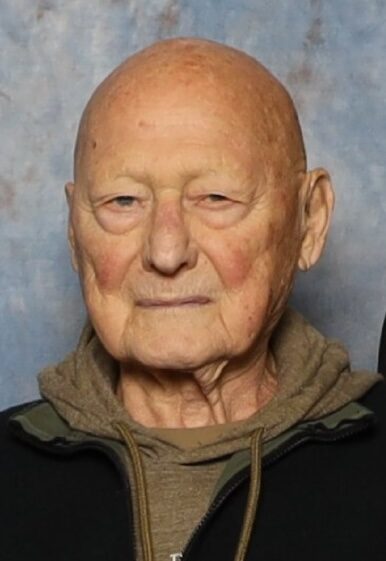
James Tolkan
James Tolkan was an American actor. Born June 20, 1931, in Calumet. Died March 26, 2026, in Saranac Lake. Educated at University of Iowa and Eastern Arizona College.
Facts
11 facts · 2 confirmed by two sources · 3 cited · 6 from one source
Where this comes from
Papalocal keeps its own record. It started from these sources; what each one said is kept here as it was copied, so a change on their side never changes this page by itself. Tap one to read its version.
What Wikidata says · copied November 15, 2026 · revision 2566938556
- Described as
- American actor (1931–2026)
- Other names
- James Stewart Tolkan
- Born
- June 20, 1931 · 3 references
- Died
- March 26, 2026 · 1 reference
- Born in
- Calumet · 1 reference
- Died in
- Saranac Lake · 1 reference
- Citizen of
- United States
- Occupation
- actor · 1 reference; television actor; film actor; television director
- Education
- University of Iowa; Eastern Arizona College
- Wikipedias with a page
- 33
Wikidata item Q783369 (wikidata.org/wiki/Q783369), public domain (CC0). Copied November 15, 2026.
What Wikipedia says · copied November 15, 2026 · revision 1375603854
James Stewart Tolkan (June 20, 1931 – March 26, 2026) was an American character actor. He was best known for portraying the strict high-school vice principal Mr. Strickland in Back to the Future (1985) and Back to the Future Part II (1989), and the character's ancestor, Marshal James Strickland, in Back to the Future Part III (1990). His other notable film credits included Serpico (1973), Love and Death (1975), Prince of the City (1981), Top Gun (1986), Masters of the Universe (1987), Viper (1988), Dick Tracy (1990), and Problem Child 2 (1991).
- Born, in its opening lines
- June 20, 1931
- Died, in its opening lines
- March 26, 2026
From the Wikipedia article “James Tolkan” (en.wikipedia.org/wiki/James_Tolkan), by its contributors, under CC BY-SA 4.0 (creativecommons.org/licenses/by-sa/4.0/). Copied November 15, 2026; not changed.
Confirmed Two sources agree. Cited One source, and it names where it got it. One source One source, without a reference of its own. Sources disagree The sources disagree. We show the best-supported value and keep theirs below.
