
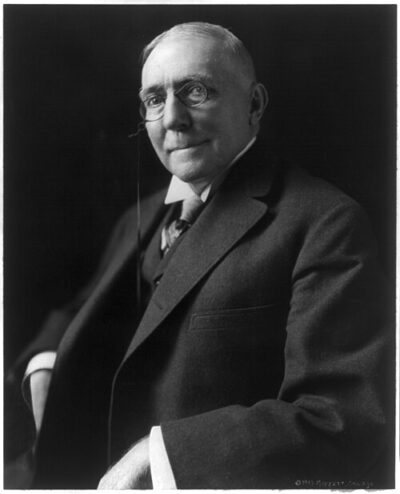
James Whitcomb Riley
James Whitcomb Riley was an American poet from Indianapolis. Born October 7, 1849, in Greenfield. Died July 22, 1916, in Indianapolis. Known for The American Flag, A Tinkle of Bells and Other Poems and duck test.
Facts
14 facts · 2 confirmed by two sources · 5 cited · 7 from one source
Where this comes from
Papalocal keeps its own record. It started from these sources; what each one said is kept here as it was copied, so a change on their side never changes this page by itself. Tap one to read its version.
What Wikidata says · copied November 18, 2026 · revision 2567362012
- Described as
- American poet from Indianapolis (1849–1916)
- Other names
- James W. Riley, Riley, James Riley, James Witcomb Riley, Benjamin P. Johnson of Boone, Uncle Sidney, James Withcomb Riley, Jay Whit
- Born
- October 7, 1849 · 5 references
- Died
- July 22, 1916 · 5 references
- Born in
- Greenfield
- Died in
- Indianapolis · 1 reference
- Buried in
- Crown Hill Cemetery · 1 reference
- Citizen of
- United States
- Occupation
- poet; writer · 2 references
- Member of
- American Academy of Arts and Letters
- Known for
- The American Flag; A Tinkle of Bells and Other Poems; duck test
- Field
- literature · 1 reference; poetry · 1 reference
- Wikipedias with a page
- 19
Wikidata item Q770177 (wikidata.org/wiki/Q770177), public domain (CC0). Copied November 18, 2026.
What Wikipedia says · copied November 18, 2026 · revision 1378362395
James Whitcomb Riley (October 7, 1849 – July 22, 1916) was an American writer, poet, and best-selling author. During his lifetime he was known as the "Hoosier Poet" and "Childrens' Poet" for his dialect works and his poetry for children. His poems tend to be humorous or sentimental. Of the approximately 1,000 poems Riley wrote, the majority are in dialect. His famous works include "Little Orphant Annie" and "The Raggedy Man".
Riley began his career writing verses as a sign maker and submitting poetry to newspapers. Thanks in part to poet Henry Wadsworth Longfellow's endorsement, he eventually earned successive jobs at Indiana newspaper publishers during the late 1870s. He gradually rose to prominence during the 1880s through his poetry reading tours. He traveled a touring circuit first in the Midwest, and then nationally, appearing either alone or with other famous talents. During this period Riley's long-term addiction to alcohol began to affect his performing abilities, and he suffered financially as a result. However, once he extricated himself from a series of poorly negotiated contracts that sought to limit his earnings, he began to accumulate wealth and eventually became a financial success.By the 1890s, Riley had become known as a bestselling author. His children's poems were compiled into a book illustrated by Howard Chandler Christy. Titled Rhymes of Childhood, it was his most popular and sold millions of copies. As a poet, Riley achieved an uncommon level of fame during his lifetime. He was honored with annual Riley Day celebrations around the United States and was regularly called on to perform readings at national civic events. He continued to write and hold occasional poetry readings until a stroke paralyzed his right arm in 1910.
Riley's chief legacy was his influence in fostering the creation of a Midwestern cultural identity and his contributions to the Golden Age of Indiana Literature. With other writers of his era, he helped create a caricature of Midwesterners and formed a literary community that produced works rivaling the established eastern literati. There are many memorials dedicated to Riley, including the James Whitcomb Riley Hospital for Children.
- Born, in its opening lines
- October 7, 1849
- Died, in its opening lines
- July 22, 1916
From the Wikipedia article “James Whitcomb Riley” (en.wikipedia.org/wiki/James_Whitcomb_Riley), by its contributors, under CC BY-SA 4.0 (creativecommons.org/licenses/by-sa/4.0/). Copied November 18, 2026; not changed.
Confirmed Two sources agree. Cited One source, and it names where it got it. One source One source, without a reference of its own. Sources disagree The sources disagree. We show the best-supported value and keep theirs below.
