
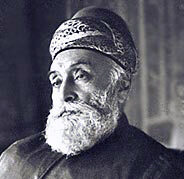
Jamsetji Tata
Jamsetji Tata was an Indian industrialist, founder of the Tata Group. Born March 3, 1839, in Navsari. Died May 19, 1904, in Bad Nauheim. Educated at University of Mumbai and Elphinstone College.
Facts
17 facts · 2 confirmed by two sources · 4 cited · 11 from one source
Where this comes from
Papalocal keeps its own record. It started from these sources; what each one said is kept here as it was copied, so a change on their side never changes this page by itself. Tap one to read its version.
What Wikidata says · copied November 16, 2026 · revision 2566796108
- Described as
- Indian industrialist, founder of the Tata Group (born 1839)
- Other names
- Jamsetji Nusserwanji Tata, Jamshed Tata, Jamshedji Nusserwanji Tata
- Born
- March 3, 1839 · 3 references
- Died
- May 19, 1904 · 3 references
- Born in
- Navsari
- Died in
- Bad Nauheim · 1 reference
- Buried in
- Brookwood Cemetery
- Citizen of
- British Empire
- Occupation
- entrepreneur · 1 reference
- Education
- University of Mumbai; Elphinstone College
- Spouse
- Hirabai Daboo
- Children
- Dorabji Tata; Ratanji Tata
- Father
- Nusserwanji Ratan Tata · 1 reference
- Mother
- Jeevanbai Tata · 1 reference
- Siblings
- Jerbai Tata; Virbaiji Tata
- Religion
- Zoroastrianism
- Wikipedias with a page
- 60
Wikidata item Q320109 (wikidata.org/wiki/Q320109), public domain (CC0). Copied November 16, 2026.
What Wikipedia says · copied November 16, 2026 · revision 1380626580
Jamsetji Nusserwanji Tata (3 March 1839 – 19 May 1904) was an Indian industrialist, philanthropist and patriarch of the Tata family who founded the Tata Group, India's largest conglomerate. He established the city of Jamshedpur.
Born into a Parsi family of priests in Navsari. It was his father Nusserwanji that broke tradition to become the first businessman in his menage. Jamsetji was 20 when he joined his father's already-established small trading and banking business in 1859. He graduated from Elphinstone College in Mumbai as a "Green Scholar."
After working in his father's export-trading firm and recognizing opportunities in the cotton industry during a business trip to China, Tata, at 29, founded a trading company in 1868. He later ventured into the textile industry and established Empress Mill, Nagpur, afterwards purchasing a bankrupt oil mill in Mumbai and converting it into a cotton mill. Tata's innovative strategies and commitment to industrial development in India led him to establish key institutions and companies, including the Taj Mahal Hotel in Mumbai, which was India's first hotel with electricity, and made significant contributions towards the establishment of the Indian Institute of Science, Tata Steel, and Tata Power. He was so influential in the world of industry that Jawaharlal Nehru referred to Tata as a One-Man Planning Commission.
Tata was a philanthropist, particularly in the fields of education and healthcare. His donations and foundations laid the groundwork for modern Indian industry and philanthropy. Tata's legacy includes the city of Jamshedpur, named in his honour, and a lasting influence on India's industrial and social landscape. He married Hirabai Daboo, and their sons, Dorabji Tata and Ratanji Tata, continued his legacy within the Tata Group. Tata's contributions were recognized posthumously, including being ranked first in the "Hurun Philanthropists of the Century" (2021) by total donations of $102.4 billion (in 2021 prices) with the start of his key endowments back in 1892.
- Born, in its opening lines
- March 3, 1839
- Died, in its opening lines
- May 19, 1904
From the Wikipedia article “Jamsetji Tata” (en.wikipedia.org/wiki/Jamsetji_Tata), by its contributors, under CC BY-SA 4.0 (creativecommons.org/licenses/by-sa/4.0/). Copied November 16, 2026; not changed.
Confirmed Two sources agree. Cited One source, and it names where it got it. One source One source, without a reference of its own. Sources disagree The sources disagree. We show the best-supported value and keep theirs below.
