
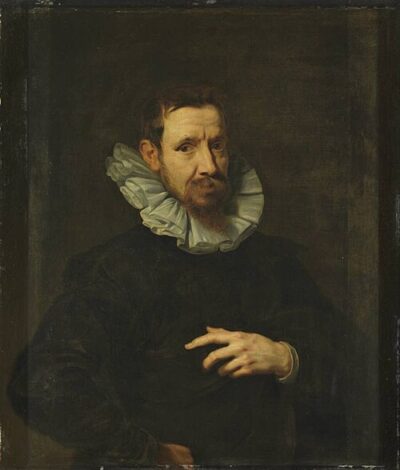
Jan Brueghel the Elder
Jan Brueghel the Elder was a Flemish painter. Born 1568, in Brussels. Died January 13, 1625, in Antwerp. Known for Large Fish Market, Visit to the Farm and Large Calvary.
Facts
31 facts · 2 confirmed by two sources · 18 cited · 11 from one source
Where this comes from
Papalocal keeps its own record. It started from these sources; what each one said is kept here as it was copied, so a change on their side never changes this page by itself. Tap one to read its version.
What Wikidata says · copied November 16, 2026 · revision 2565538935
- Described as
- Flemish painter (1568–1625)
- Other names
- Jan (I) Brueghel, Jan Brueghel (I), Jan I Brueghel, Old Brueghel, Jan, il vecchio Brucoli, Jan Broeghel, Flower Breughel, Velvet Brueghel, Jan Breughal, Fluwelen Breugel, Jan, the elder Breughel, Jan Breughel
- Born
- 1568 · 9 references
- Died
- January 13, 1625 · 7 references
- Born in
- Brussels · 1 reference
- Died in
- Antwerp · 1 reference
- Cause of death
- cholera
- Citizen of
- Habsburg Netherlands
- Occupation
- painter · 4 references; artist · 2 references; graphic artist · 1 reference; architectural drafter · 1 reference; visual artist · 1 reference
- Member of
- Antwerp Guild of Saint Luke; Brueghel
- Genre
- landscape painting · 1 reference; genre art; still life · 1 reference; history painting · 1 reference; genre painting · 1 reference; religious painting · 1 reference
- Known for
- Large Fish Market; Visit to the Farm; Large Calvary · 1 reference
- Spouse
- Isabelle de Jode · 1 reference; Catharina van Marienberghe
- Children
- Jan Brueghel the Younger · 1 reference; Ambrosius Brueghel · 1 reference; Anna Brueghel; Paschasia Brueghel · 1 reference
- Father
- Pieter Bruegel the Elder · 1 reference
- Mother
- Mayken Coecke
- Siblings
- Pieter Brueghel the Younger · 1 reference
- Wikipedias with a page
- 46
Wikidata item Q209050 (wikidata.org/wiki/Q209050), public domain (CC0). Copied November 16, 2026.
What Wikipedia says · copied November 16, 2026 · revision 1381430409
Jan Brueghel the Elder ( BROY-gəl, US also BROO-gəl; Dutch: [ˈjɑm ˈbrøːɣəl] ; 1568 – 13 January 1625) was a Flemish painter and draughtsman. He was the younger son of the eminent Flemish Renaissance painter Pieter Bruegel the Elder, and brother to Pieter Brueghel the Younger. A close friend and frequent collaborator with Peter Paul Rubens, the two artists were the leading Flemish painters in the Flemish Baroque painting of the first three decades of the 17th century.
Brueghel worked in many genres including history paintings, flower still lifes, allegorical and mythological scenes, landscapes and seascapes, hunting pieces, village scenes, battle scenes and scenes of hellfire and the underworld. He was an important innovator who invented new types of paintings such as flower garland paintings, paradise landscapes, and gallery paintings in the first quarter of the 17th century. However, he generally avoided painting large figures, as in portraits, though he often collaborated with other painters who did these, while he did the landscape backgrounds, and sometimes the clothes.
He further created genre paintings that were imitations, pastiches and reworkings of his father's works, in particular his father's genre scenes and landscapes with peasants. Brueghel represented the type of the pictor doctus, the erudite painter whose works are informed by the religious motifs and aspirations of the Catholic Counter-Reformation as well as the scientific revolution with its interest in accurate description and classification. He was court painter of the Archduke and Duchess Albert VII and Isabella, sovereigns of the Spanish Netherlands.
The artist was nicknamed "Velvet" Brueghel, "Flower" Brueghel, and "Paradise" Brueghel. The first is believed to have been given him because of his mastery in the rendering of fabrics. The second nickname is a reference to his fame as a painter of (although not a specialist in) flower pieces and the last one to his invention of the genre of the paradise landscape. His brother Pieter Brueghel the Younger was traditionally nicknamed de helse Brueghel, 'Hell Brueghel' because it was believed he was the creator of a number of paintings with fantastic depictions of fire and grotesque imagery. These paintings have now been reattributed to Jan Brueghel the Elder.
- Born, in its opening lines
- 1568
- Died, in its opening lines
- January 13, 1625
From the Wikipedia article “Jan Brueghel the Elder” (en.wikipedia.org/wiki/Jan_Brueghel_the_Elder), by its contributors, under CC BY-SA 4.0 (creativecommons.org/licenses/by-sa/4.0/). Copied November 16, 2026; not changed.
Confirmed Two sources agree. Cited One source, and it names where it got it. One source One source, without a reference of its own. Sources disagree The sources disagree. We show the best-supported value and keep theirs below.
